
 |
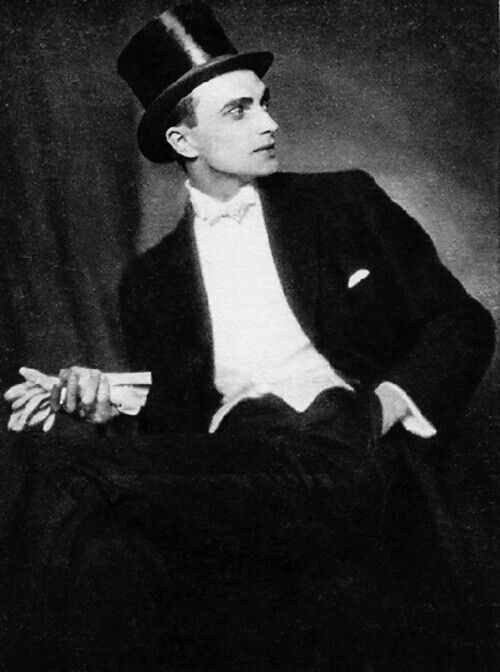
| Conrad Veidt, c. 1920, by Karl Schenker |
Hans Walter Conrad Veidt, affectionately nicknamed Connie, was born 22 January, 1893. There is some discrepancy regarding the exact location of his birth, but it's likely he was born in a residential area of central Berlin. His parents, Phillipp Heinrich Veidt and Amalie Marie Anna (née Göhtz), were members of the late 19th century's ever-growing middle class. They had one other child besides Connie, a boy named Karl, who died at the age of nine shortly after the turn of the century. Herr and Frau Veidt sent their son Connie to school in Schöneberg where, even though he struggled in school and had terrible grades, he briefly imagined himself going into medicine before finally discovering theater in his late teens when he received high praise for his performance in a Christmas school play. Connie technically left school without graduating, but it didn't matter. By then, he was determined to begin his career as an actor.
One of the most prestigious theaters in Berlin was Max Reinhardt's Deutsches Theater. Connie had resolved to attend as many performances there as he could, absorbing the work of the great actors of the early 20th century from the cheap seats. His parents didn't always have the income necessary to fund Connie's trips to the theater, but his mother made sure to have some extra cash on hand to support her son's newfound passion. Connie and his mother Anna doted on one another and were always very close. His relationship with his father was more chilly. Phillipp, a civil servant who died in 1917 right as Connie's stage career was taking off, was fairly conservative. Connie confessed years later that his choosing to work in the arts had been a significant disappointment to his father. But Anna loved her son without exception. Her death in 1922 was profoundly devastating to Connie, and he would go on to say candidly that he never really got over it.
Throughout 1913, Connie spent a lot of time awkwardly hanging around the Deutsches Theater and eventually befriended a staff member who was able to introduce him to a member of Reinhardt's company. This actor offered training sessions and, for a small fee, took Connie on as a student. After several sessions, Connie finally auditioned for Max Reinhardt, performing monologues from Faust. Despite being so green, he must have made an impression, because he received a contract shortly afterward. Connie was over the moon, but his happiness was cut short by Germany declaring war in 1914.