
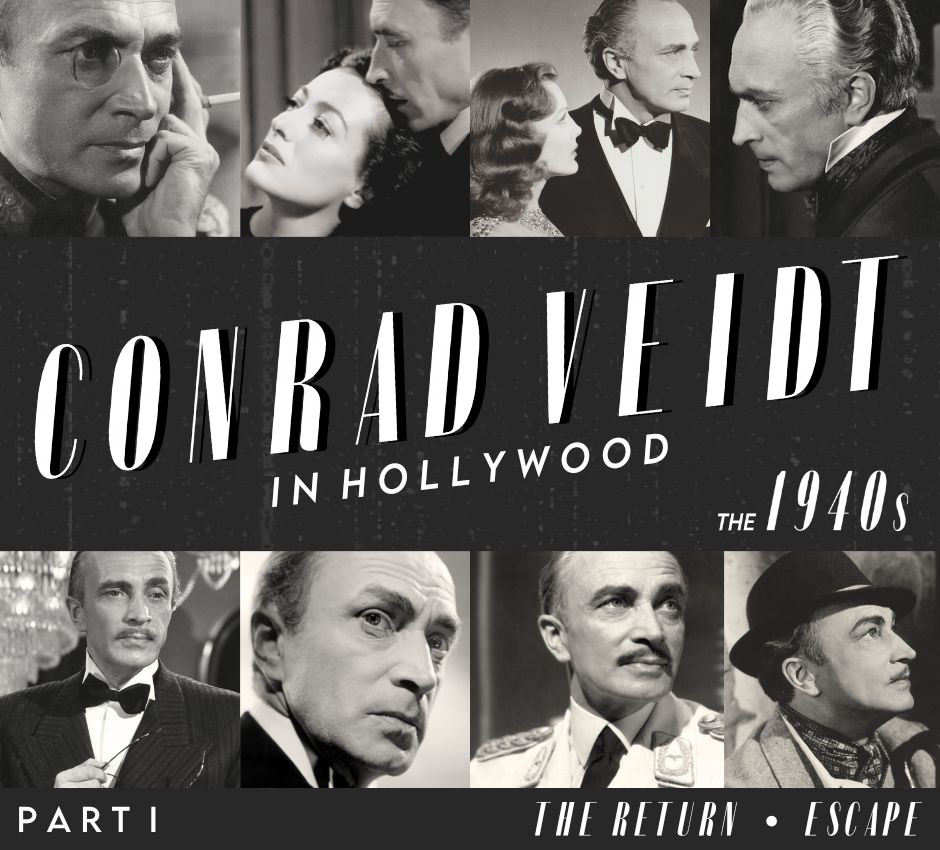
In the spring of 1940, Conrad Veidt and his wife Lily traveled from England to America to promote and distribute his new film with Powell and Pressburger, Contraband. This was during a critical time in Great Britain's fight against Germany, and the film was thought to be a perfect opportunity to increase American support for the British war effort. The isolationist United States was still a neutral power in 1940, and the UK could use all the help it could get.
But no sooner had Connie and Lily arrived in New York than Hollywood came calling. There's a role opening up in MGM's new picture with Norma Shearer and Robert Taylor, they said. The actor we originally cast as the villain isn't scary enough! Would you be interested in the part? they said. Oh, and by the way… the character is a Nazi general.
It's not a stretch to assume that Veidt would have felt conflicted about this offer. On the one hand, MGM's Louis B. Mayer was requesting Veidt specifically, and the opportunity could have led to a long-term contract with the most prestigious studio in Hollywood. But conversely, being asked to play a Nazi must have been disappointing, to say the least, to such an established and versatile performer as Veidt who was a fervent anti-fascist. Connie had never been cast in a role like this. He had played many villains across his storied career, but never a Nazi.
So what would possess him to agree to this?
The offer would certainly mean more money, but a hefty paycheck wasn't really important to Connie personally. However, because he was donating the bulk of his salary to support England's war relief, perhaps he was thinking about the various scenarios in which he could do the most good for the most people. And maybe that meant doing something symbolic in addition to practical financial support. It's possible he thought that, by accepting this role and any future roles like it, he could help make American audiences see how much of a problem the Nazis were, something he had first-hand experience with.
Regardless, going after Veidt was a smart move on MGM's part. Connie was a huge box office draw in the UK, a headliner, often receiving top billing. So MGM literally snapped him up the second he set foot back on American soil.
But once they had him, it's like they didn't know what to do with him.
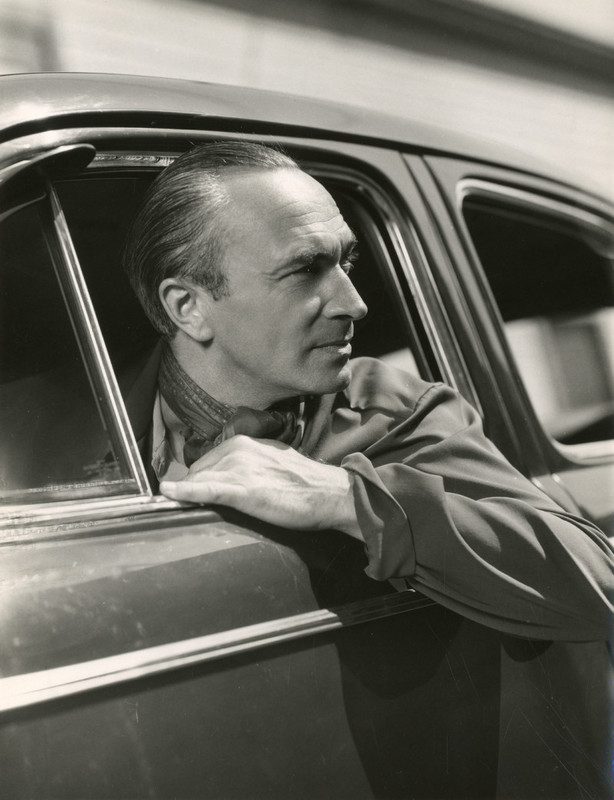 |
| Conrad Veidt, 1940, by Clarence Sinclair Bull |
Welcome to the first of a series of posts about Conrad Veidt's work in the United States between 1940 - 1943. I've been wanting to write about this particular part of Connie's career for a while, mainly because there is an underlying sense that the way Hollywood treated him in this period was one of the factors that contributed to his lack of a broader legacy in film history compared to his peers.
Veidt's return to Hollywood was sadly cut short by his sudden death in 1943, but in that time he made eight very different films under the fabled American studio system: Escape, A Woman's Face, Whistling in the Dark, The Men in Her Life, All Through the Night, Nazi Agent, Casablanca, and Above Suspicion. These titles make up the bulk of Veidt's films that one might occasionally encounter on the Turner Classic Movie channel, some of which are better than others for sure.
In only one of these late career films Veidt was allowed to play the heroic lead. Between 1940 - 1943, his Hollywood contract saw him typecast as six villains, four of which, unfortunately, were Nazis. And none of these roles were close to approximations of romantic leads or love interests as a number of the parts he'd played in the UK in the '30s had been. Regardless, Conrad Veidt infused his 1940s Hollywood roles with complex and subtle, at times verging on subversive, sexuality. The notable exception was of course when it came to his portrayal of Nazi antagonists in All Through the Night, Nazi Agent, and Casablanca.
But Hollywood was uninterested in offering Connie any parts that were particularly challenging. His most memorable roles during this era are the ones he made work through sheer force of will.