
 |
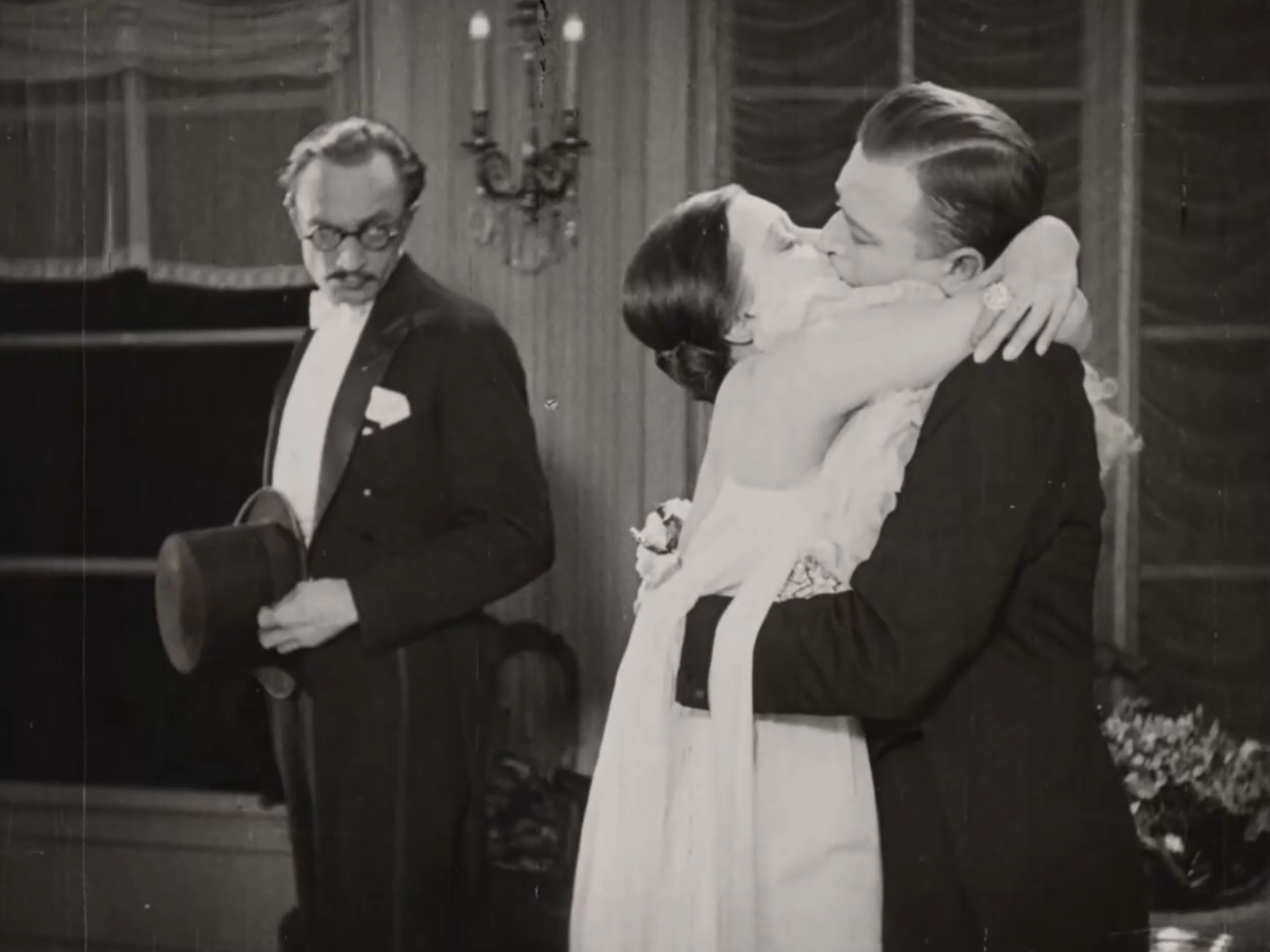
| Conrad Veidt, Lil Dagover and George Alexander in Liebe macht blind |
In the summer of 2025, the Valparaíso Recovered Film Festival in Chile announced that they were planning to screen a newly discovered print of Liebe macht blind, a 1925 silent film previously considered lost to the ravages of time. For the ride or die Conrad Veidt fans, this was a pretty big deal. Of Veidt's 100+ title filmography, nearly half are thought to be lost. The combination of volatile materials, inadequate storage and preservation, and/or the destruction by state or national governments under the guise of censorship and erasure all mean that the vast majority of films produced before 1930 have effectively disappeared off the face of the Earth, or at the very least are in such poor condition that restoration isn't an option. The numbers vary depending on who you ask, but as many as 90% of all silent films could be lost to us.
So naturally, when one of these films resurfaces, it's major news. Over time, one becomes resigned to the very real possibility that you'll never get to see these lost treasures. But when one is found, it feels like a little glimmer of hope, you think maybe there are other gems somewhere out there too.
With Liebe macht blind, it's a rare, and nearly miraculous, case of a complete print being found in relatively good condition. Jaime Cordova, director of the Valparaíso Recovered Film Festival, was lucky enough to come across the 35 mm nitrate print seemingly randomly in Santiago, Chile. This discovery is unique, says Cordova, because Chile wasn't a big hub for cinephiles in the early 20th century the way neighboring countries were. Apparently there had also once been another copy of the film in the United States, but it was reportedly in really bad shape, rendering salvage attempts virtually impossible. Old film is incredibly fragile and susceptible to extensive deterioration, but thankfully there are a number of archival institutions working with prints and fragments of existing films, such as Mexico's Cineteca Nacional where Cordova sent his copy of Liebe macht blind.
The film, directed by Lothar Mendes and written by Robert Liebmann and Viktor León, premiered again 100 years after its initial release at the 29th annual Valparaíso Recovered Film Festival on October 4, 2025. The screening featured a live performance of a new score conducted by composer Andrés Barros Martínez, which has been uploaded to Youtube. It's often the case that modern scoring for silent films is too bombastic or otherwise out of step with the style, but the new music for Liebe macht blind is a scaled back composition for only a few musicians that perfectly suits the era and genre.
Liebe macht blind, "Love is Blind" in English and "El amor nos hace ciegos" in Spanish, is a silly, standard comedy about Liane (Lil Dagover), who suspects her husband Viktor (George Alexander) of infidelity. When a beautiful actress comes to town to shoot a new film, Liane drugs her philandering husband to keep him at home. But her doctor (Conrad Veidt), who is naturally also madly in love with Liane, gives her a placebo instead of the sedatives she asks for. So having failed, the next obvious step, Liane thinks, is to disguise herself as another woman in order to that prove her husband is up to no good. Hijinks ensue when all parties wind up involved in the film shoot, and everything wraps up with a traditional yet somewhat disappointingly happy ending when husband and wife eventually make up.
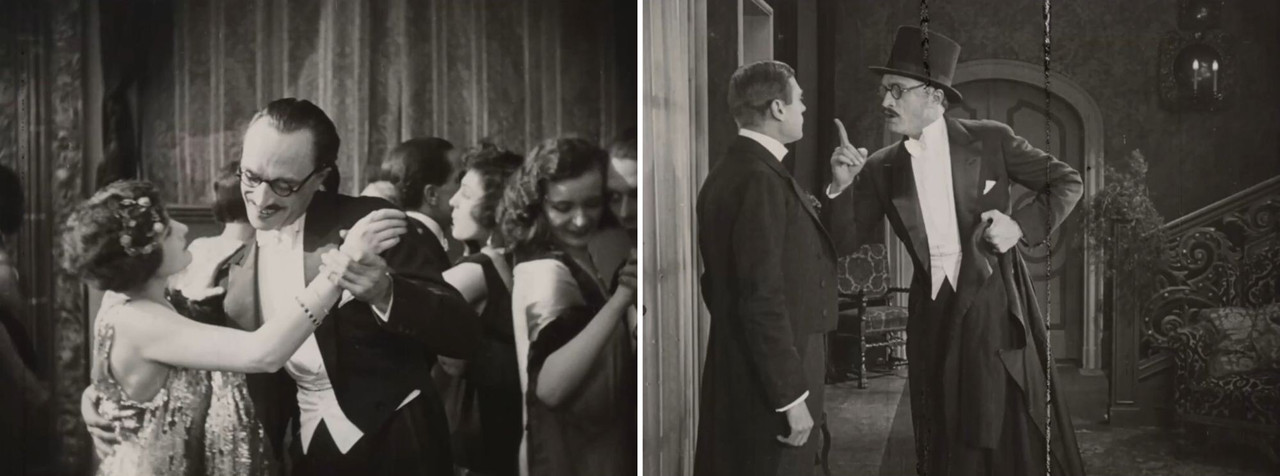 |
| Conrad Veidt as Doctor Lamare; Liebe macht blind, 1925 |
As a comedy, Liebe macht blind leans more toward farce and satire, which was received well by 1925 and 2025 audiences and critics alike. Shot on the Ufa stages at Neubabelsberg in Berlin, the filmmakers, including producer Erich Pommer, seemingly wanted to ensure the film was a hit. Lavish sets designed by art director Hans Jacoby and a cast featuring major stars of the day (including a cameo by Emil Jannings as himself) went a long way in helping elevate what sounds like a very silly film on paper.
Liebe macht blind is noteworthy among Conrad Veidt fans for being the only traditional comedy in his body of work. Known primarily in the silent era for his dramatic roles, from the truly sinister to the more mundane, Connie just wasn't considered a comedian. Despite there being evidence of his sense of humor and comedic timing, especially in later films (see 1940's Contraband and 1943's Above Suspicion), he is to this day seen as "the man with wicked eyes", "demon of the silver screen". But in reality, Connie had great versatility as an actor; his enduring image as a villain has more to do with which of his films are considered important for whatever reason than his ability as a performer. Reviews reacting to the original release as well as the few from folks who attended the Valparaíso Recovered Film Festival all express surprise at how well-suited to comedy Connie was. The stills we have from the film show him with slicked back hair and a funny little mustache, in black tie with an a-typical pair of thick glasses instead of his signature monocle. In a number of these shots, he looks uncharacteristically awkward rather than dashing or menacing.
One of the only nods to standard Veidt fare in the film is that his character, Doctor Lamare, ends up playing an Indian prince in the movie within the movie. It is worth noting that Connie was occasionally cast, both in Germany and the UK, as South Asian and Middle Eastern characters that were unfortunately considered "exotic" by white Europeans. I would like to eventually tackle this area of his career in more depth, but the fact remains that romanticized and racist orientalism was common particularly in genre films in the Weimar era. In Liebe macht blind, Connie's character supposedly makes a fool of himself when playing the Indian prince, which could be interpreted as a satirical take on his work in films like Das indische Grabmal (1921) and Furcht (1917), although I hesitate to read too much into this particular plot point when I haven't yet seen the film.
Doctor Lamare is also revealed to be a hypnotist, which leads me to wonder whether this character choice was laying the groundwork for his character, a magician/mentalist, in 1929's The Last Performance.
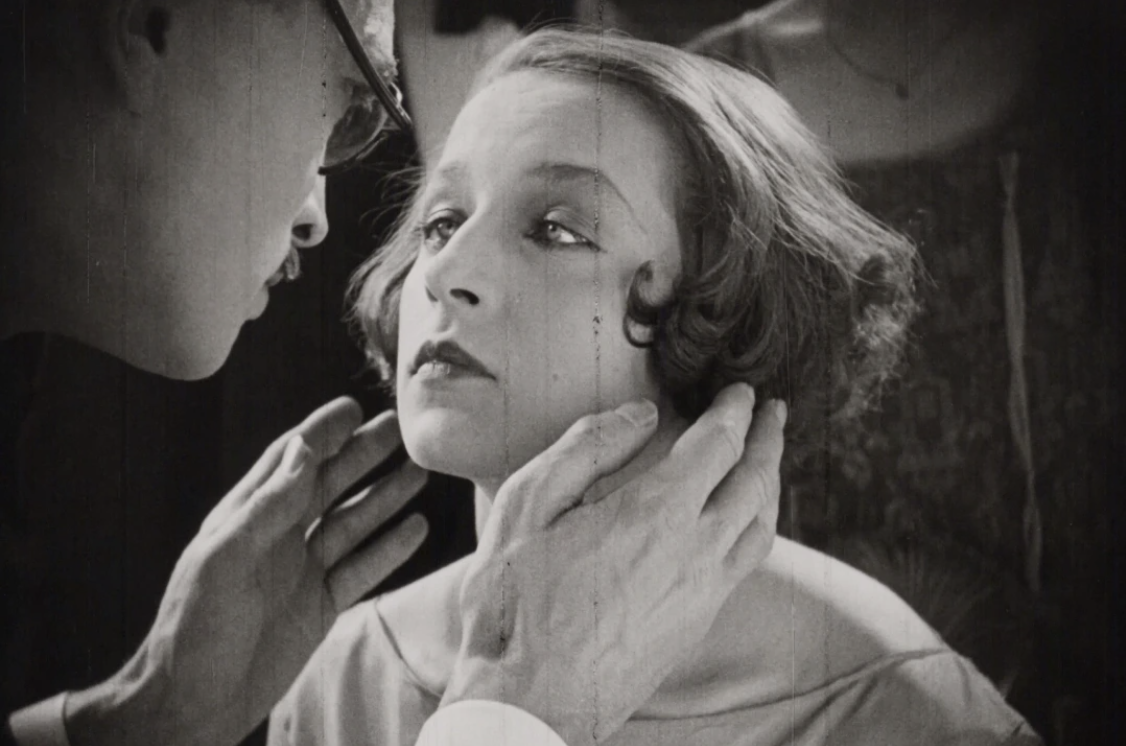 |
| Conrad Veidt and an unknown actress; Liebe macht blind, 1925 |
The Chilean print of Liebe macht blind has been digitized, so there's no reason why it couldn't be part of programming at other festivals or screenings in the future. I'm keeping my fingers crossed that it will eventually appear online for international audiences to enjoy. Regardless, its very existence is definitely encouraging. Who knows what other lost Conrad Veidt films are out there, tucked away on dusty shelves, just waiting for an unsuspecting film lover to discover them?
- Conrad Veidt On Screen, John T. Soister
- El Amor Nos Hace Ciegos, Cine Recobrado de Valparaíso
- "Festival de Cine Recobrado suma un neuvo hallazgo", Marcelo Macellari for La Estrella de Valparaiso, 18.07.2025
- "A delight from start to finish", user fsilva, IMDB review
- Lost Films, Deutsche Kinemathek, Wayback Machine
No comments:
Post a Comment