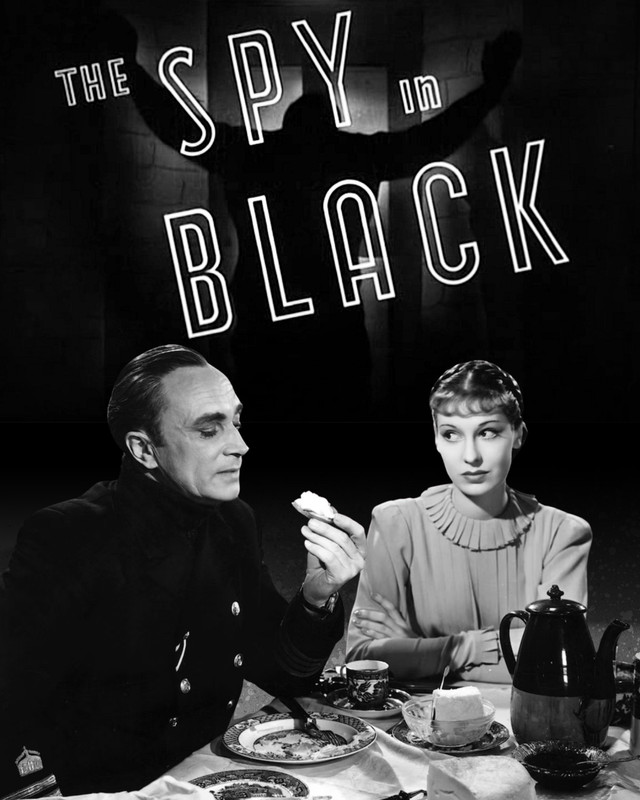
That evening, at the Ramsgate Hotel, I could hardly believe my eyes as I looked around the crowded lounge. The bar was doing a brisk business, and our crew, including Conrad Veidt and Valerie Hobson… were hobnobbing with the Royal Navy, the Royal Naval Reserve, and the Royal Volunteer Reserve, all very much on deck. Connie and Valerie has the biggest crowd around them, asking what it was like to be a film star, and telling them what a wonderful job they had done in The Spy in Black…
I rubbed my eyes and marveled… But it couldn't possibly last. Such openness and enthusiasm, and such innocence!
- Michael Powell, A Life in Movies
---
England had changed by the time Contraband went into production. The war had officially arrived, scores of enemy ships were reported off the coast, and the film industry was at a standstill. Studios were shut down and turned into supply warehouses, and what little resources were left to filmmakers almost immediately went toward shooting new propaganda pictures.
The British government knew it was only a matter of time until air strikes on their cities and towns would begin. Blackouts were enforced in an attempt to protect civilians and infrastructure, but they posed their own safety concerns.
September 1939 saw the official declaration of war between England and Germany. German-speaking emigres in Great Britain were now considered "enemy aliens". The Aliens Department of the British Home Office set up internment camps for likely Nazi sympathizers. Many German-speaking Jews were considered refugees and escaped internment.
Conrad Veidt and his wife Lily, a Hungarian Jew like Emeric Pressburger, were lucky. They had received their official British citizenship papers in 1938. Had they not, it's very possible they would have avoided internment anyway because of their outspoken hatred of Hitler and the Nazis.
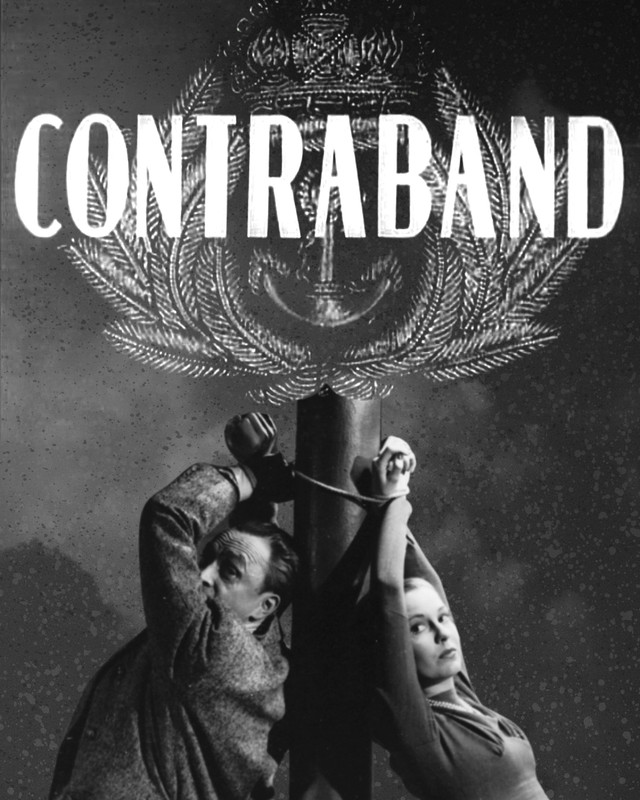
Contraband was Powell and Pressburger's first film tackling the second world war. In fact, it was the first feature-length propaganda film made during the war, period, and therefore an experiment for everyone involved. It was an experiment for Conrad Veidt as an actor, for the filmmakers to prove their first collaboration wasn't a fluke, and for England's Ministry of Information which was overseeing all film productions at this time.