That evening, at the Ramsgate Hotel, I could hardly believe my eyes as I looked around the crowded lounge. The bar was doing a brisk business, and our crew, including Conrad Veidt and Valerie Hobson… were hobnobbing with the Royal Navy, the Royal Naval Reserve, and the Royal Volunteer Reserve, all very much on deck. Connie and Valerie has the biggest crowd around them, asking what it was like to be a film star, and telling them what a wonderful job they had done in The Spy in Black…
I rubbed my eyes and marveled… But it couldn't possibly last. Such openness and enthusiasm, and such innocence!
- Michael Powell, A Life in Movies
---
England had changed by the time Contraband went into production. The war had officially arrived, scores of enemy ships were reported off the coast, and the film industry was at a standstill. Studios were shut down and turned into supply warehouses, and what little resources were left to filmmakers almost immediately went toward shooting new propaganda pictures.
The British government knew it was only a matter of time until air strikes on their cities and towns would begin. Blackouts were enforced in an attempt to protect civilians and infrastructure, but they posed their own safety concerns.
September 1939 saw the official declaration of war between England and Germany. German-speaking emigres in Great Britain were now considered "enemy aliens". The Aliens Department of the British Home Office set up internment camps for likely Nazi sympathizers. Many German-speaking Jews were considered refugees and escaped internment.
Conrad Veidt and his wife Lily, a Hungarian Jew like Emeric Pressburger, were lucky. They had received their official British citizenship papers in 1938. Had they not, it's very possible they would have avoided internment anyway because of their outspoken hatred of Hitler and the Nazis.
Contraband was Powell and Pressburger's first film tackling the second world war. In fact, it was the first feature-length propaganda film made during the war, period, and therefore an experiment for everyone involved. It was an experiment for Conrad Veidt as an actor, for the filmmakers to prove their first collaboration wasn't a fluke, and for England's Ministry of Information which was overseeing all film productions at this time.
---
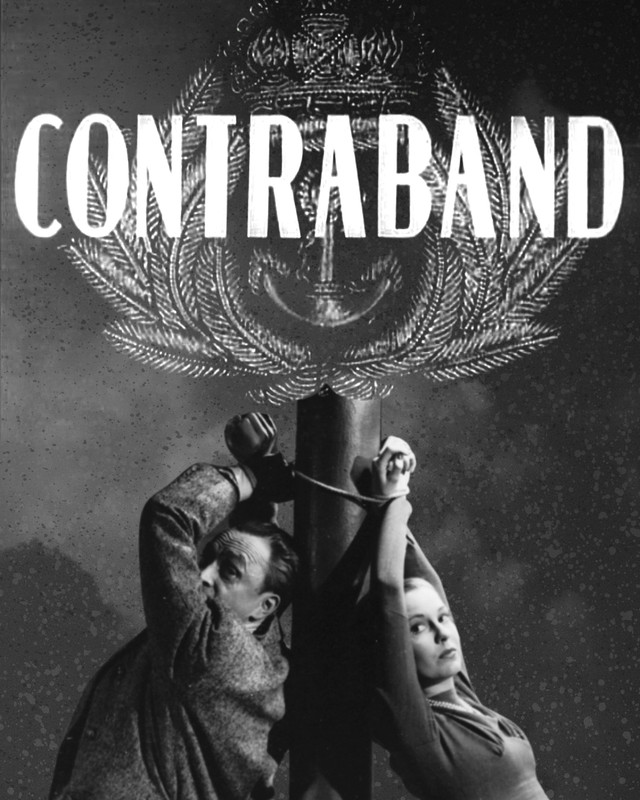
Contraband, 1940
Dir. Michael Powell
Wr. Emeric Pressburger
Starring Conrad Veidt, Valerie Hobson, Hay Petrie
Great Britain during wartime. British Contraband Control must inspect each vessel passing through England's ports and The Helvig, on its way to Denmark, is one such waylaid ship. The freighter's captain, Hans Andersen, begrudgingly cooperates, but his impatience grows, especially after his landing papers are stolen by two suspicious passengers, Mr. Pidgeon and Mrs. Sorensen.
Andersen rushes to catch up with them as they head for London. Despite the city being in the middle of an enforced blackout, Andersen manages to find Mrs. Sorensen. They stop first at a local Danish restaurant where, during the meal, she admires his pocket watch. It clearly means a lot to him, but during the ensuing action, Andersen loses the pocket watch.
They decide to make the most of a night in London. They end up at Sorensen's family home for a drink, but are captured by German spies. Sorensen, whose real name is Miss Clayton, turns out to be a British spy, who with Mr. Pidgeon is gathering intel on secret German ships in English waters.
The Nazi thugs, under orders from lead agent Van Dyne, tie Clayton and Andersen to a column in a nightclub cellar. The two pretty quickly devise a plan allowing Andersen to escape, leaving Clayton behind. He rounds up his fellow countrymen from the Danish restaurant. Andersen can't remember exactly where he and Miss Clayton were held, so they search each nightclub in the vicinity. Chaos erupts when German agents clash with the Danes. Van Dyne follows Andersen to one of the upper warehouse floors where he's bashed over the head by the captain wielding a plaster bust of Neville Chamberlain.
Miss Clayton barely makes the boat train back to the harbor. It's revealed later that she went back to retrieve Andersen's beloved pocket watch. The Helvig sets sail on schedule the next morning, and it's heavily implied that our two heroes live happily ever after.
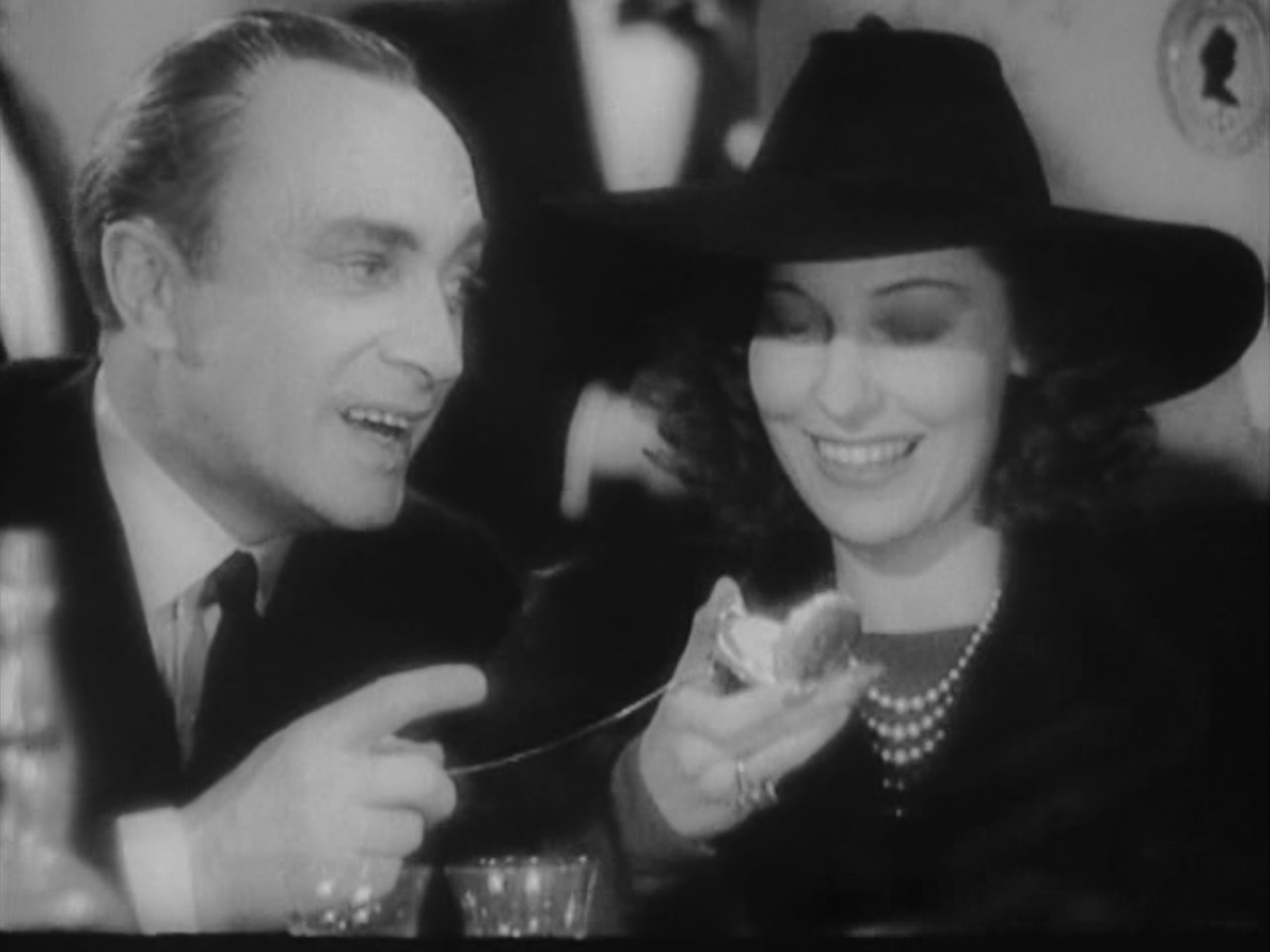 |
| Captain Andersen and Mrs Sorensen/Miss Clayton at The Three Vikings |
Contraband could be read as a touch frivolous or even self-indulgent. Someone on IMDB slammed the film for being “Camp Expressionism”. I think they meant it as a dig, but if it means something that's cute, quirky, risqué, not to mention well-directed and well-shot, with a tight script and excellent performances, I don’t think it's disparaging at all.
People have also compared Contraband to popular American screwball comedies of the era, but that doesn’t seem quite fair either. Contraband, thanks to Powell, Pressburger, the editor, and the cast, has a very light touch and a charmingly vintage continental sensibility compared to many of the comedies coming out of Hollywood in the ‘30s and '40s. It manages to be successful without any over-done gags or affected performances. Michael Powell called the film “all pure corn, but corn served up by professionals.” Nothing wrong with that.
Conrad Veidt, who had also recently worked with Powell on The Thief of Bagdad, loved their working relationship so much that he proposed setting up a new production company with the director along with Pressburger. It was to be a short lived experiment, but had Veidt not gone back to Hollywood in 1940, who's to say the three wouldn’t have continued to work together? This is purely speculative of course, but there almost certainly could have been a role for Veidt at least in Powell and Pressburger's next film, 49th Parallel.
Contraband, with a bare-bones budget of £35,000 (~ £2.5M today), was shot both on location in Kent's port city of Ramsgate and London Films' Denham studios. They brought on esteemed art director Alfred Junge who came from the tradition of German Expressionism at Ufa during the silent era. He went on to be another long-time collaborator of the Archers, working on The Life and Death of Colonel Blimp, A Canterbury Tale, I Know Where I'm Going!, and more, giving their films a signature look. Along with Freddie Young's cinematography, Junge helped to elevate Contraband above just being a regular old comedy.
Setting the main action during a London blackout is actually very clever (the film was eventually renamed Blackout in the US). It forces a number of scenes into almost total darkness, which was a risky move, but it adds yet another interesting layer to the film, visually and in terms of story. There’s an unusual POV tracking shot when Andersen and Mrs. Sorensen are walking up to her house that’s just lit by their flashlight. Except for her hand briefly putting the key in the lock, we don’t see either of them until Powell cuts to an overhead shot. There’s also a moment later in the nightclub basement where Veidt’s face is entirely in shadow. We know he’s looking at Hobson, but his expression is completely hidden in darkness. On paper, it sounds like a mistake, but this Expressionistic lighting and camera work adds a little extra special sauce to an already enjoyable film.
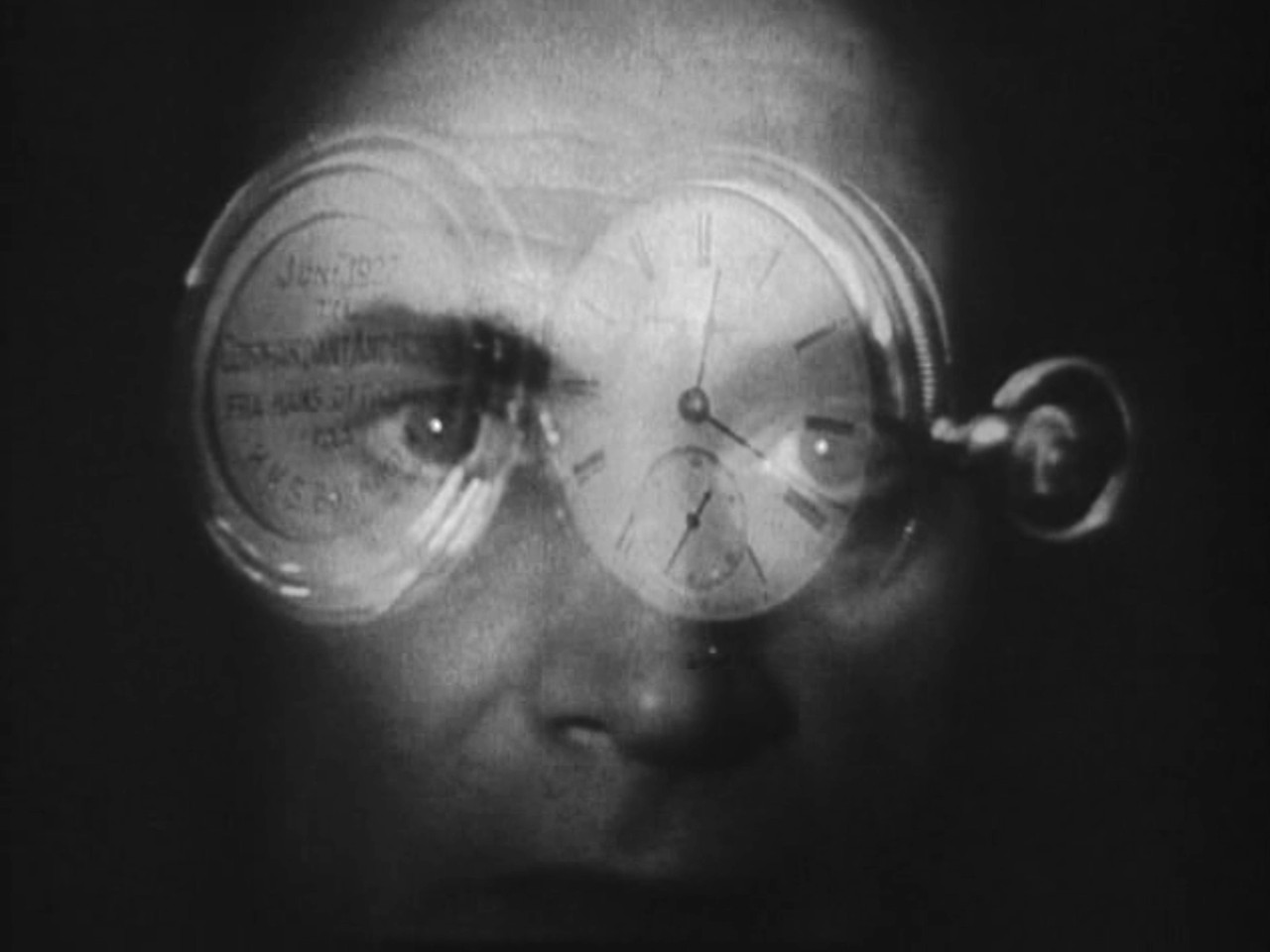 |
| Conrad Veidt emerges from the shadows in close up, a ghostly pocket watch floating in front of his face |
Pressburger was inspired by a film Powell had just worked on called The Lion Has Wings. He wanted to flex his skills as a writer while also declaring his allegiance to Great Britain at the start of the war. Pressburger's investment in the script along with Veidt and Hobson's reunion made for something extremely personal, even more so than The Spy in Black. The film is infused with inside jokes and references to their daily lives. They went so far as to recreate the restaurant they all used to go to.
As with The Spy in Black, the comedy in Pressburger's script is executed with relative subtlety. You almost have to be looking for the humor here to catch it, and it pays off. It’s cheeky, not really driven by jokes and punchlines, and never plays down to the audience.
The dialogue is pretty saucy for the time period, and there are all these references to bondage and sadomasochism of one variety or another, some quite obvious. Andersen and Clayton are literally tied up together in the dark, and he says things to her like "Good girl" and "I shall hurt you". They're really pushing the envelope to see what they could get away with, and it's so much fun to watch. The tone is definitely lighter and sillier than the eroticism of Powell and Pressburger's later films; the sexual madness in Black Narcissus and the complicated relationship dynamics in The Small Back Room make Contraband look like a Disney movie by comparison.
The glaring exception to this otherwise fairly progressive film is the randomly shoehorned “White Negro” nightclub sequence. It’s so out of place. This cabaret act literally could have been anything, so why choose this? There isn't a lot of readily available surviving info about the choreographer, Hedley Briggs, who I assume is white. But it does seem like he was known for romanticizing and exoticizing African and Caribbean people in his work, an unfortunately common practice at that time.
The war propaganda element is present but secondary to the stars and filmmakers taking the opportunity to show off. Veidt and Pressburger were both vehemently anti-Nazi, but did audiences pick up on this tension laying just underneath the film's surface, of two emigres who had to flee their homeland, a place they could no longer recognize after it had been warped by fascism? British audiences might have seen the nuance, but it may have been lost on Americans. Veidt was by now technically a naturalized British citizen, but he would always be seen as German with a capital G because that's the only way producers thought they could sell him to audiences during wartime.
Contraband's plot is, admittedly, a bit convoluted and the finer details are treated as a throw-aways. But if you’re not paying super close attention, you’re not missing much. The spy plot between the British agents and the Nazis is really just there to give the lead characters something fun to do. The major beats of the story are clear enough, as is the sparkling chemistry between Veidt and Hobson.
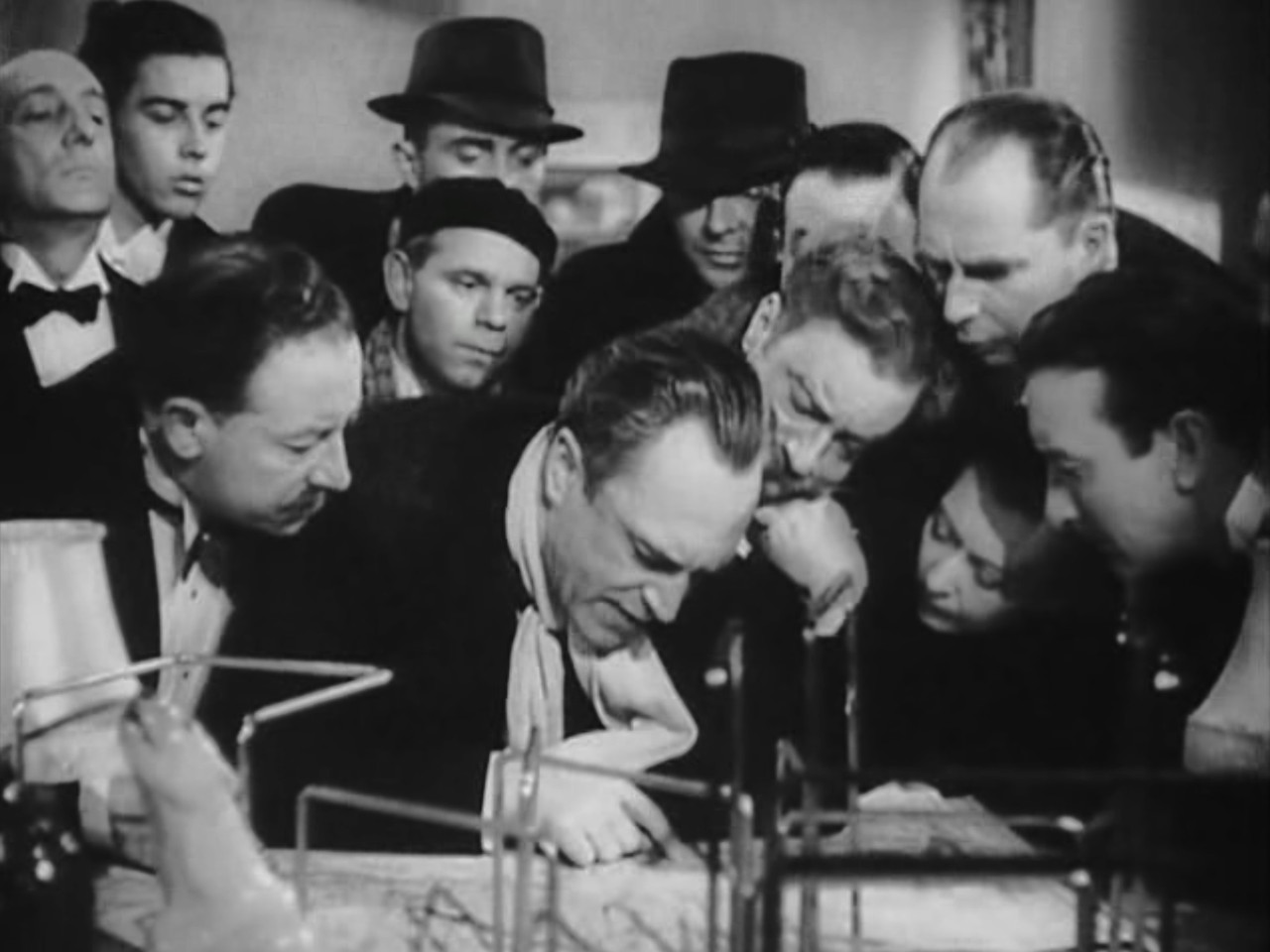 |
| Andersen rounds up reinforcements at The Three Vikings |
The supporting cast is all generally pretty good. Hay Petrie is especially fun in a double roll. There’s a short scene in the rowboat where he looks like he’s going to get sea sick despite being a sailor. Several little character touches like that are scattered throughout the movie: The girl in short shorts doing exercises in her cabin, the line delivery of the woman who works in the kitchen with Uncle Erik, the guy lighting his pipe outside during the blackout letting two cops absolutely have it. I love a character actor driven movie, and all of these people in bit parts add so much color to the story.
Valerie Hobson as Mrs Sorensen/Miss Clayton is excellent. First of all, she looks incredible. From the tweed jacket and headscarf that matches her blouse to the dress with the angular shoulder pads to the big wide-brimmed hat, every look is iconic. And her performance is quite possibly even better here than in The Spy in Black. She’s confident and authoritative, yet she’s not exactly a femme fatale. Sorensen/Clayton is independent, intelligent, stunning, and above all courageous. She's involved in these super dangerous spy games and she clearly enjoys it. She's the epitome and ideal of the modern woman. When Andersen shares his outdated perception of women, she gives him this look as if to say, "Who exactly do you think you're talking to right now?"
(I would go so far as to say all the women in Powell and Pressburger films are uniquely interesting and complicated. Their movies are often led by women, and, sure, the narratives tend to center around their relationships with men, but even as supporting characters these women never feel like an afterthought.)
Sadly, it sounds like Hobson didn’t get to do a lot of other fun roles outside of the two films she made with Powell and Pressburger. She was tragically another victim of miscasting and being underutilized, which is a real shame. She and Connie have a natural chemistry that neither feels feel too personal nor too studied. Their on screen work together feels easy, without all the baggage and volatility of off-screen romance.
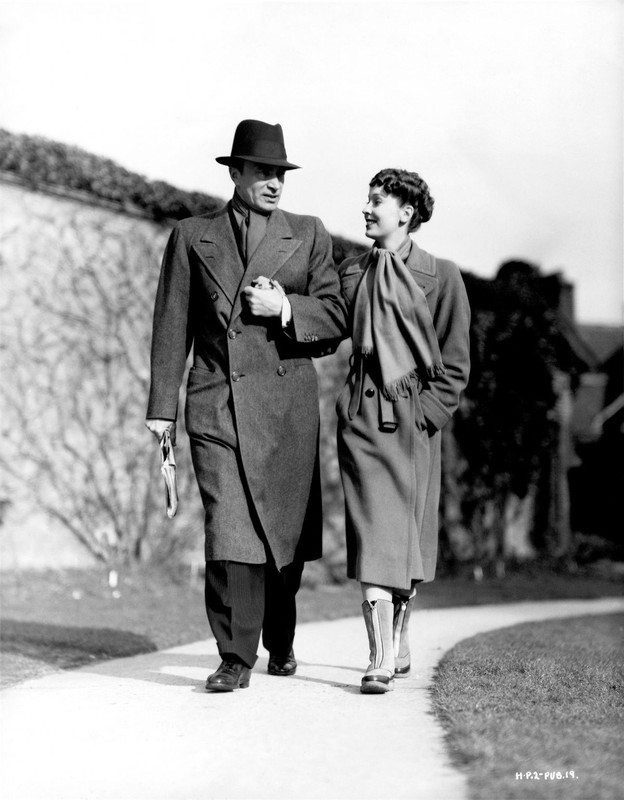 |
| Veidt and Hobson at Denham |
Hobson revealed in later years that maybe she didn't take Connie very seriously: "He had a riveting screen presence and yet he was not really a great actor; this is rather like some American stars who have the right physique and an amazing talent for the camera without being very interested in acting." She also claimed, "he never bothered a great deal about his characterization… He trusted people to show his character to the best advantage and did just what he was told… He placed himself in Mick's [Michael Powell] hands and he couldn't have done better than that..."
This quote is interesting, namely because Veidt's process as an actor was well documented. He often spoke of the deeply introspective and all-consuming character work he would do to prepare for a role. This was something he did well into the height of his career, although it might be that he approached these two films, The Spy in Black and Contraband, differently. There's no way to know for sure. Hobson is right about the pocket mirror though. Veidt was a technician on set. He knew the difference between good lighting and bad lighting, he knew what angles were the most flattering. His standards were exceptionally high. Thankfully, Michael Powell was on the same page.
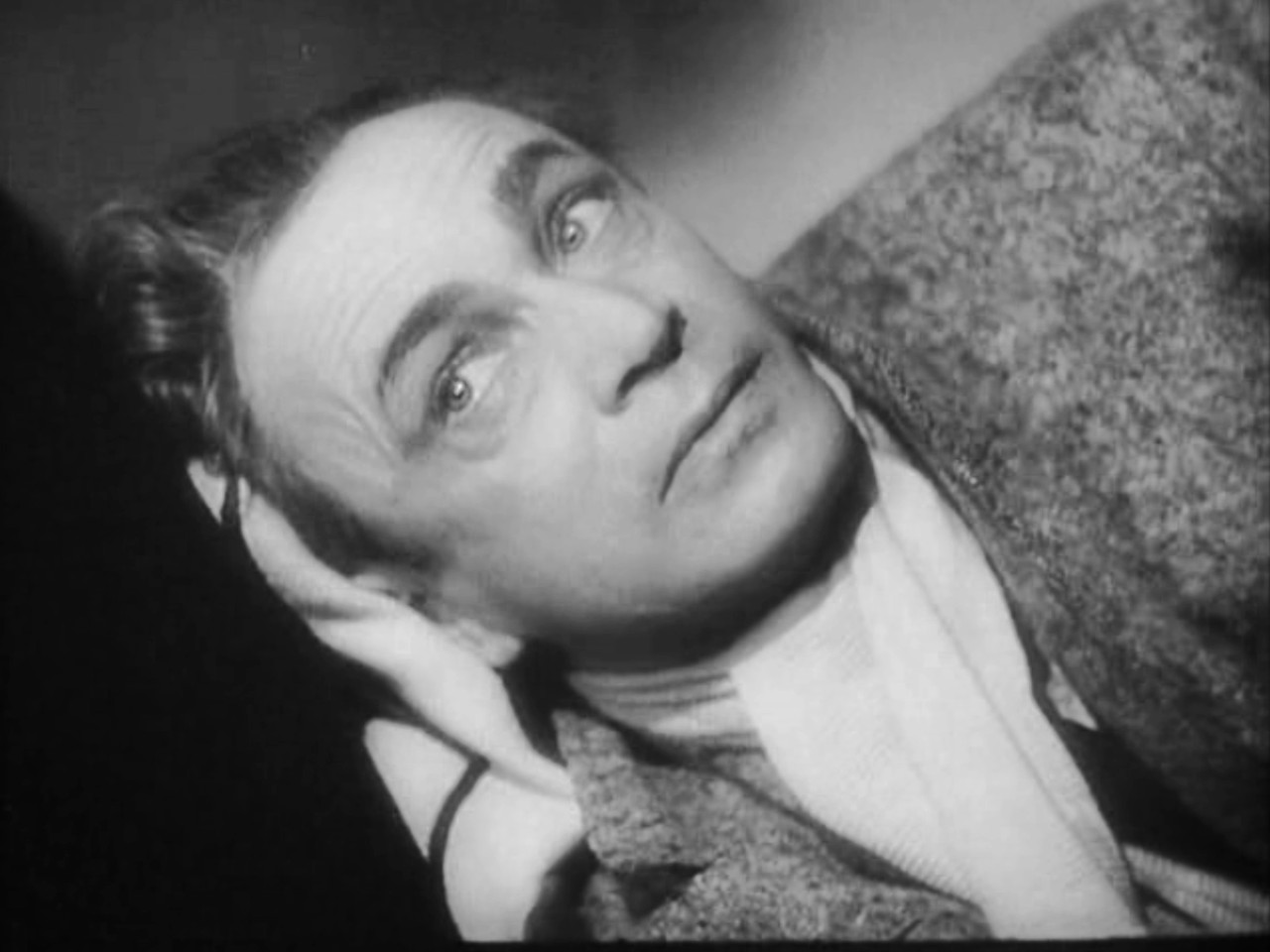 |
| Andersen wakes up after being knocked out |
Captain Andersen may be another naval officer, but he does feel different to Veidt's character in The Spy in Black. In Contraband, Connie actually gets to play a true good guy without being a tragic hero, something very rare in his filmography. And he executes it well, Andersen is a role that really suits Veidt. He had struggled during the first years of his contract with Alexander Korda who just didn't get Veidt's strengths as an actor. But Powell and Pressburger were able to work directly with the actor to tailor these two great characters around his existing talent and his desire to be seen as more than a villain.
As Andersen, Connie is for once the fun, adventurous, romantic lead. He starts the film maybe even grumpier than Spy's Captain Hardt, as he is forced to deal with one inconvenience after another. And he's really quite funny. There are all these excellent comedic beats Connie is hitting in his gestures and facial expressions. It’s definitely choreographed but not affected or overplayed. His timing and delivery is subtle and finely tuned, which always ends up being funnier than an actor who deliberately plays up the laughs. For example, he takes this almost awkwardly long pause after Mrs. Sorensen corrects his mispronunciation of the name of the restaurant, The Three Vikings. He furrows his brow, looks around, and finally mutters, “…VI-kings.” His comedy is so understated, which keeps the rapid-fire pacing from being obnoxious.
This particular scene, along with the butter bit in The Spy in Black, are callbacks to Valerie Hobson teasing Connie for his slip ups with English during rehearsals. A lot of people, then and now, like to rag on Connie for his accented English, but personally I think he sounds great. English is a notoriously hard language to learn, and to compensate for a lack of fluency Veidt would use his strengths as an actor to his advantage. His dialogue coach Robert Morley said, "He was a master at delivering lines… He always spoke them very slowly when everyone else spoke rather fast, and soft when everyone spoke loudly." This sets Connie apart from a lot of other actors of this era in film and forces the audience to pay close attention.
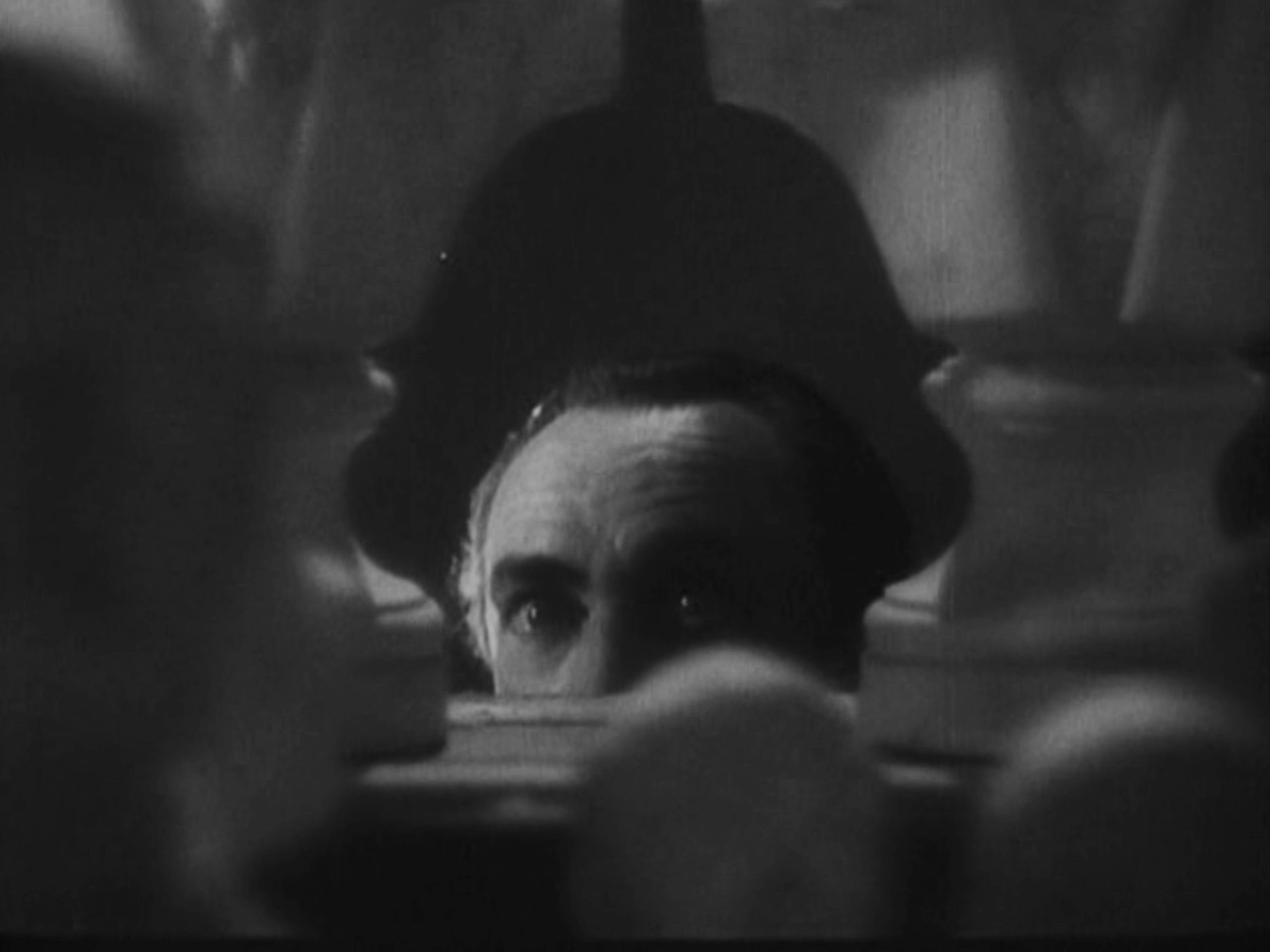 |
| Andersen peeks out from behind a row of plaster busts of Neville Chamberlain |
Andersen's demeanor feels like a mask he wears as captain of his ship. He’s so used to being commanding and authoritative, but, based on Connie’s performance, one gets the impression that deep down Andersen doesn’t really subscribe to all that traditional masculinity he's trying to perform. Later in the film, it’s relatively easy for him to drop this façade and adjust his expectations, becoming more flexible regarding gender roles. A notable moment is when Andersen realizes an unseen cabaret singer he assumed was a man is actually a woman with a lovely tenor voice. Andersen isn’t played like a standard masculine movie hero of the time because that’s simply not who Connie was.
In addition to the fairly progressive view of sex and gender in the film, there is an added complication of nationality. Valerie Hobson said, "We mustn't forget that Conrad Veidt was a German, and at that time, with the war just starting, it was difficult for him. I think he always felt faintly embarrassed by the fact that he'd been a German star and had a very ripe German accent. Very cleverly Emeric made him not a German in Contraband. He was just as believable being a Dane, and that was charming."
Andersen and Mrs. Sorensen/Miss Clayton are pretty evenly matched. In fact, she has the upper hand and the more progressive, dominant role especially once they arrive in London. On his ship, he’s the boss, but on shore he’s met with a string of disadvantages. Clayton has to be the one to pay for his bus and cab fare, all while confidently navigating her way through the blackout. Meanwhile, Andersen is pretty much a bumbling fool, a sidekick to Clayton’s spy adventure. But he’s not totally incompetent either, he’s the one who comes up with the plan to rescue Clayton from her Nazi captors (although she probably would have found her own way out without his help).
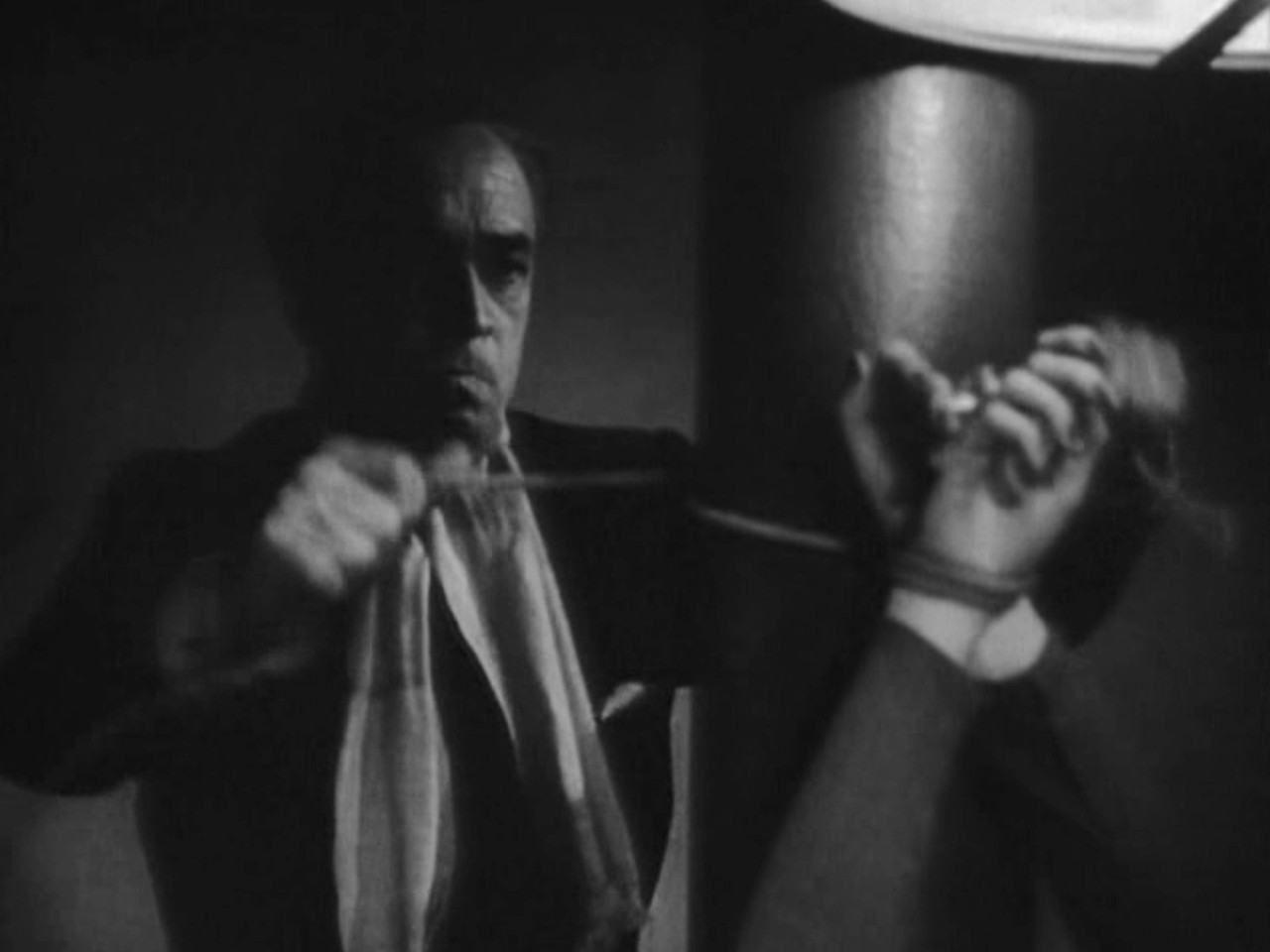 |
| Clayton allows Andersen to adjust her ropes so he can escape |
There's a moment before he leaves her tied up in the basement to go find help where he's trying so hard to play it cool, leaning into the suggestive nature of their predicament. But then he steps back for a second, and there's this look that passes over his face as if he's realizing there's a real possibility that he might fail, he might never see her again. And it's with this look still on his face, no trace of the suave romantic swagger from moments before, that he leans down to kiss her.
The Archers made the great decision that Andersen doesn’t and can't save the day alone. He goes back to The Three Vikings to round up a small army of Danish essential workers to back him up. Connie plays the whole last act of the film like he’s literally on an adventure. As an actor, it looks like he's having the absolute best time finally getting to be the big movie star hero, tussling with cops and Nazis, solving puzzles with glee, and even getting the girl in the end.
There are so many wonderful little touches in this movie. From the performances to the writing to the technical details, it’s hard not to fall in love with this one. Contraband is easily one of those films I could rewatch over and over again and never get sick of it.
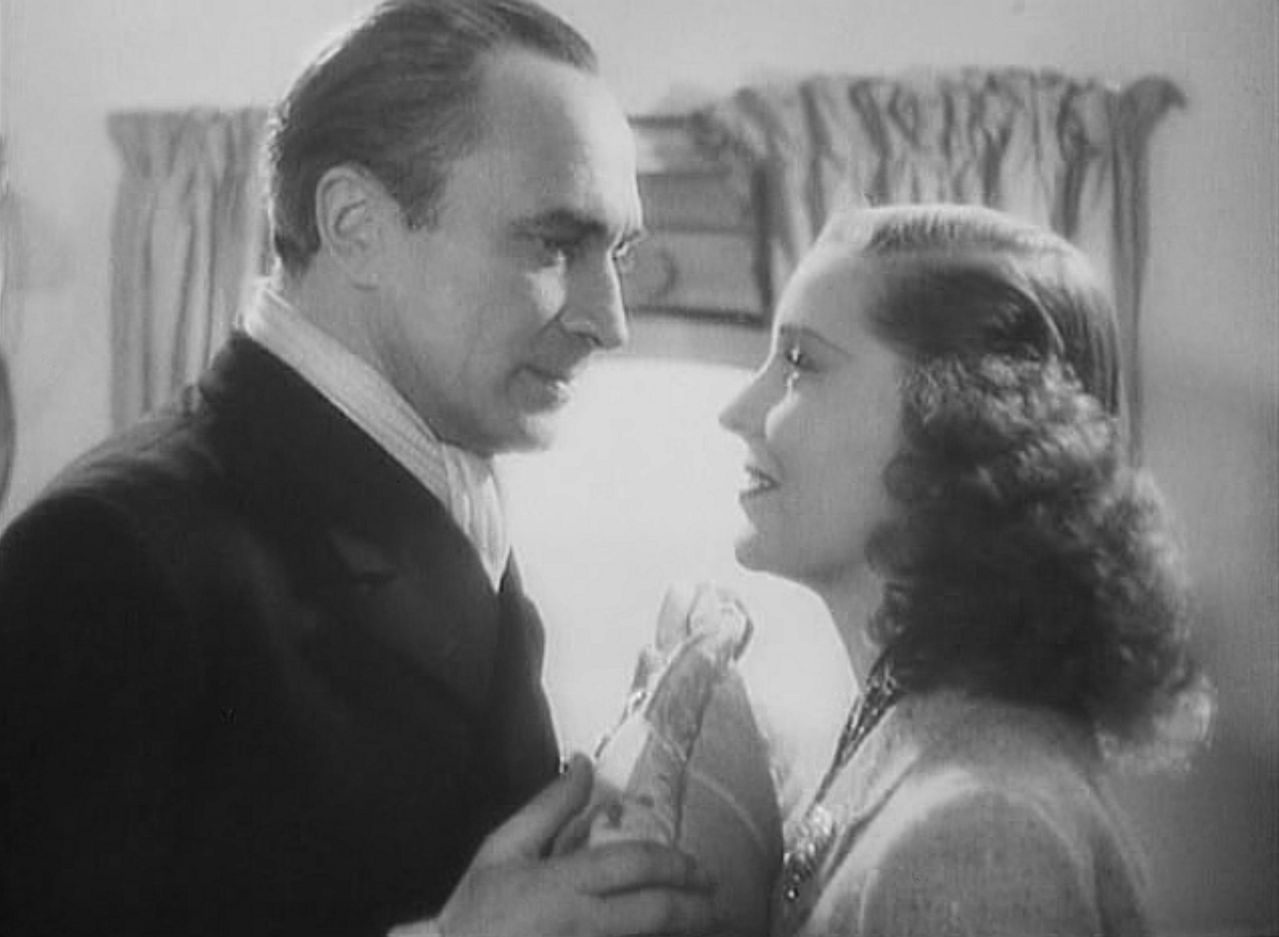
Contraband was to be Conrad Veidt's last film with the Archers. In the spring of 1940, Veidt sailed to New York to help promote and distribute this picture, a genuine labor of love. Powell and Pressburger were already beginning pre-production on 49th Parallel, which took them to Canada. British films about the war were about become more serious as the threat of German invasion grew. 49th Parallel reflects this shift (except perhaps for Laurence Olivier's very silly French Canadian accent). It's definitely more violent and the stakes are a lot higher.
But 49th Parallel assured Michael Powell and Emeric Pressburger's ascent into the canon of great British film. Their subsequent films during the 1940s are all visionary works of art and storytelling infusing sentimental drama, intense psychology, and surrealism. The Life and Death of Colonel Blimp, A Canterbury Tale, I Know Where I'm Going!, A Matter of Life and Death, Black Narcissus, The Red Shoes, and The Small Back Room represent a cohesive and ever-evolving body of work, not to mention an impressive output for the years between 1943 - 1949.
Conrad Veidt of course stayed in America. His later career never quite saw the same freedom he enjoyed with Powell and Pressburger. This transition is covered extensively in my earlier post,
Veidt in Hollywood: Part 1, but for the most part after he left England Veidt became a tool of the studio system. Like Alexander Korda, American film producers were only capable of seeing a fraction of what Connie was capable of. The only exception is 1942's
Nazi Agent where he plays both the villain and the hero, identical twin brothers.
His two films with Michael Powell and Emeric Pressburger are treasured by Veidt fans because they are outliers, Contraband especially because he gets to play outside the box of typecasting and live happily ever after.
---
RESOURCES:
- Conrad Veidt On Screen, John T. Soister
- A Life in Movies: An Autobiography, Michael Powell
- Emeric Pressburger: The Life and Death of a Screenwriter, Kevin Macdonald
- Sixty Voices: Celebrities Recall the Golden Age of British Cinema, Brian McFarlane
- Made In England: The Films of Powell and Pressburger, dir. David Hinton
-
"Contraband", Alexander C. Ives, Senses of Cinema, Issue 36, July 2005

No comments:
Post a Comment