I had been longing to get my hands on Conrad Veidt ever since he came to England. He was such an overpowering personality that directors were afraid of him. He was tall, over six foot two inches, lean and bony. He had magnetic blue eyes, black hair and eyebrows, beautiful, strong hands, and a mouth with sardonic, not to say satanic, lines to it. He used an eye-glass. He was the show-off of all time. In private life, as I was to discover, he was the sweetest and most easy of human beings.
…Conrad Veidt was seated alone at a table by the window drinking coffee when Emeric [Pressburger] and I arrived at the studio restaurant. Emeric and I exchanged a glance. This magnificent animal was reserved for us. I went over and stood at his table. He looked up and I got the full impact of those deep blue eyes under black brows.
I said: ‘Mr Veidt, my name is Michael Powell. Alexander Korda has told me that we are to work together on ‘The Spy in Black’.’
He said: ‘Ye-e-e-s.’ Pumas purr like that.
- Michael Powell, A Life in Movies
---
Before the stunning Technicolor dreamscapes of The Red Shoes and Black Narcissus, before they became known as The Archers and two of the most innovative and visionary filmmakers in Great Britain, director Michael Powell and screenwriter Emeric Pressburger originally joined forces at Alexander Korda's London Films in 1938.
They both came from separate but equally impressive backgrounds in their respective fields. Powell, originally from Kent, had worked his way up the ladder in the days of silent film in France and England. Pressburger, a Jewish Hungarian immigrant forced to flee Europe in the '30s, had worked with the likes of Fritz Lang at the height of German Expressionism in the Weimar Republic.
There's probably a lot to be said for their combined experience coming into the early days of their famous and storied partnership. And the fact that they teamed up with fellow film veteran, Conrad Veidt, very likely impacted the extremely polished look and feel of their debut work together, The Spy in Black.
---
The Spy In Black, 1939
Dir. Michael Powell
Wr. Emeric Pressburger, based on a scenario by Roland Pertwee
Based on a novel by J. Storer Clouston
Starring Conrad Veidt, Valerie Hobson, Sebastian Shaw, Marius Goring
The first world war rages across Europe, on land and on sea. German U-boat captain Ernst Hardt receives his next mission: liaise with one of the Kaiser's spies currently undercover as a schoolmistress, alias Miss Burnett, stationed in Scotland's Orkney Islands.
The spy, a Fräulein Thiel, informs Hardt that he must coordinate with his men back on their submarine to do as much damage to a nearby British fleet as possible. Full details of the attack are provided by Lt. Ashington, another agent working with Tiel.
Hardt, Thiel, and Ashington receive a visit from the real Miss Burnett's fiance, a vicar, who they keep prisoner in the schoolhouse. This whole time Hardt has been flirting with Thiel, but discovers that she and Ashington are not only married but double agents working for the British.
Hardt realizes that he's sending his men into a trap. He disguises himself in the vicar's clothes and escapes the schoolhouse and onto a steamer ferry back to the mainland. Thiel, aka Jill Blacklock, is also on the ferry along with a handful of civilians and some captured German POWs. Hardt frees his countrymen and they take control of the ferry. They try to reach the bay where the attack is about to take place, all the while chased by British destroyers. The U-boat spots the ferry but is unable to see Hardt's desperate signal. They fire on the little steamer, which prompts the British destroyers to fire on them, killing every one of Hardt's men.
As the ferry sinks, Hardt allows all the passengers to disembark by lifeboat. Wracked with guilt and grief, the captain elects to stay behind, refusing to join the survivors, and die a captain's death at sea.
---
The Spy in Black feels worlds away even from something like The Life and Death of Colonel Blimp, which Powell and Pressburger made just four years later. Despite the whole final act taking place at sea with U-boats and battleships firing at one another, the film doesn’t come close to the opulence of what would become The Archers’ most well-known and beloved films. The Spy in Black is minimalist by comparison, and yet it doesn’t feel out of place when considered among their other works.
Set mostly in the Orkney Islands, a damp and cold feeling permeates the film. That’s something The Archers are exceptionally good at as filmmakers – creating a multisensory experience for the viewer just through visuals and sound design, whether it’s the wind battered Himalayan monastery in Black Narcissus, or the ever present rain and closeness of the sea in The Spy in Black. Atmosphere and a sense of place are key defining factors in their films from day one.
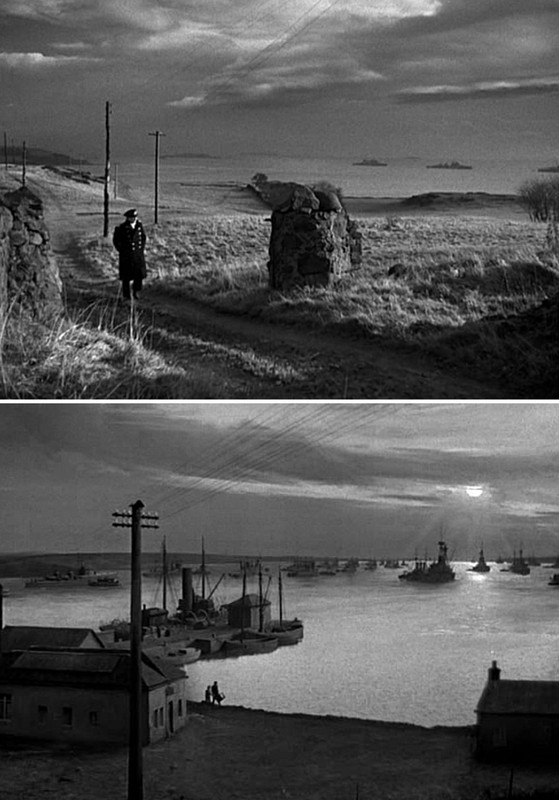 |
| The Spy in Black exterior locations |
The two filmmakers were well aware of Conrad Veidt’s prestige and wanted to make sure the film paid homage to Veidt’s past work. There are many scenes with deep, angular Expressionistic shadows for him to disappear into and creep out of. Many scenes are shot in close up because of how cramped the sets were, there was no real room for wide angles or long tracking shots. The title of the film has been bugging me, but now I think it’s not so much about what Hardt wears as it is about him lurking in the shadows. The look of the film was absolutely intentional; Powell wanted to create an environment best suited to his star's image and screen persona.
Powell had been trying to work with Veidt for years, and Connie had struggled through the mid-'30s to find truly suitable roles in England. There were a small handful of Veidt-centered projects on Powell's wish list that never came to anything due to lack of interest, bad timing, and lack of funds. At Alexander Korda's London Films studios in Denham, they were like two ships passing in the night. That is, until Korda assigned Powell to The Spy in Black.
The script was based on an existing story and underwent extensive rewrites by Pressburger. He completely transformed the basic skeleton of an awkward WWI spy thriller into something suitable for the starring actors. When Pressburger presented his initial treatment to Powell in a meeting with Korda (in front of the original screenwriter), it was love at first sight. Powell was endlessly impressed by this "small Hungarian wizard" and his inventive mastery of storytelling. But The Spy in Black wasn't finished. So Korda instructed Powell and Pressburger on the spot to go find Conrad Veidt to work it out.
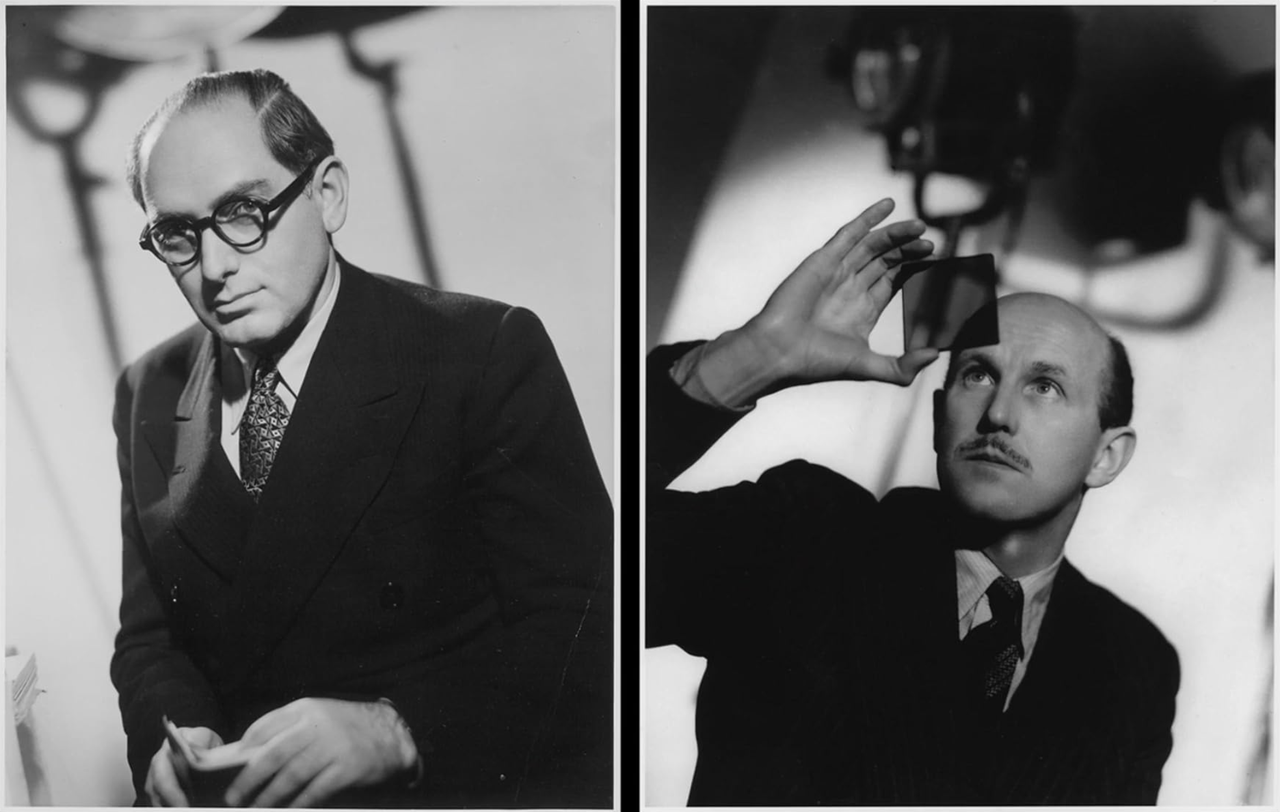 |
| Emeric Pressburger & Michael Powell |
Pressburger's dialogue suits the actors so perfectly. This likely has everything to do with the hands-on collaboration between the filmmakers and their two stars. Powell, Pressburger, Veidt and Hobson all instantly got along. They spent extra time in rehearsals, unusual for the 1930s, honing the script, joking around, and infusing the characters with all these personal touches that set the tone for the whole production.
There's an understated humor to The Spy in Black. The film has some really finely crafted comedic moments that fit seamlessly into the action. When Hardt is wrestling his motorbike up a hill and is startled by a bunch of sheep, he baas back at them. It humanizes Hardt, who doesn’t really need the help. By that point in the movie, he’s already completely endeared himself to the audience. But The Spy in Black is not a comedy by any means, it’s a drama with room for humor.
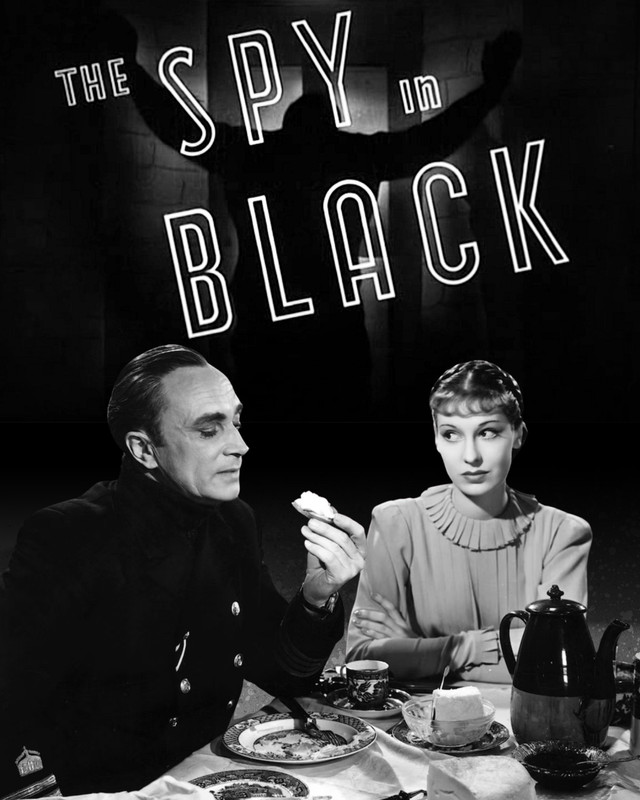
For example: Hardt has been deprived of decent food possibly for years due to rationing and embargos on imported goods. Early in the film when Hardt and his first mate sit down to dinner, he goes on and on, listing all the decadent dishes he can think of with animated sensual silliness. Of course, the restaurant doesn't have anything he asks for, only boiled vegetables. Later when he arrives at the schoolhouse rendezvous and is checking each room to make sure it’s safe, suddenly the camera catches him in closeup staring with extreme intensity at something off screen. We’re to think he sees something dangerous on the kitchen table. Powell cuts to Valerie Hobson looking confused and concerned. The music builds dramatically as they sharply cut back to Hardt who is creeping towards the table. He reaches down, grabs something – is it a knife? is it a gun? The music crescendos and he lifts the thing to his face to reveal… a giant block of butter.
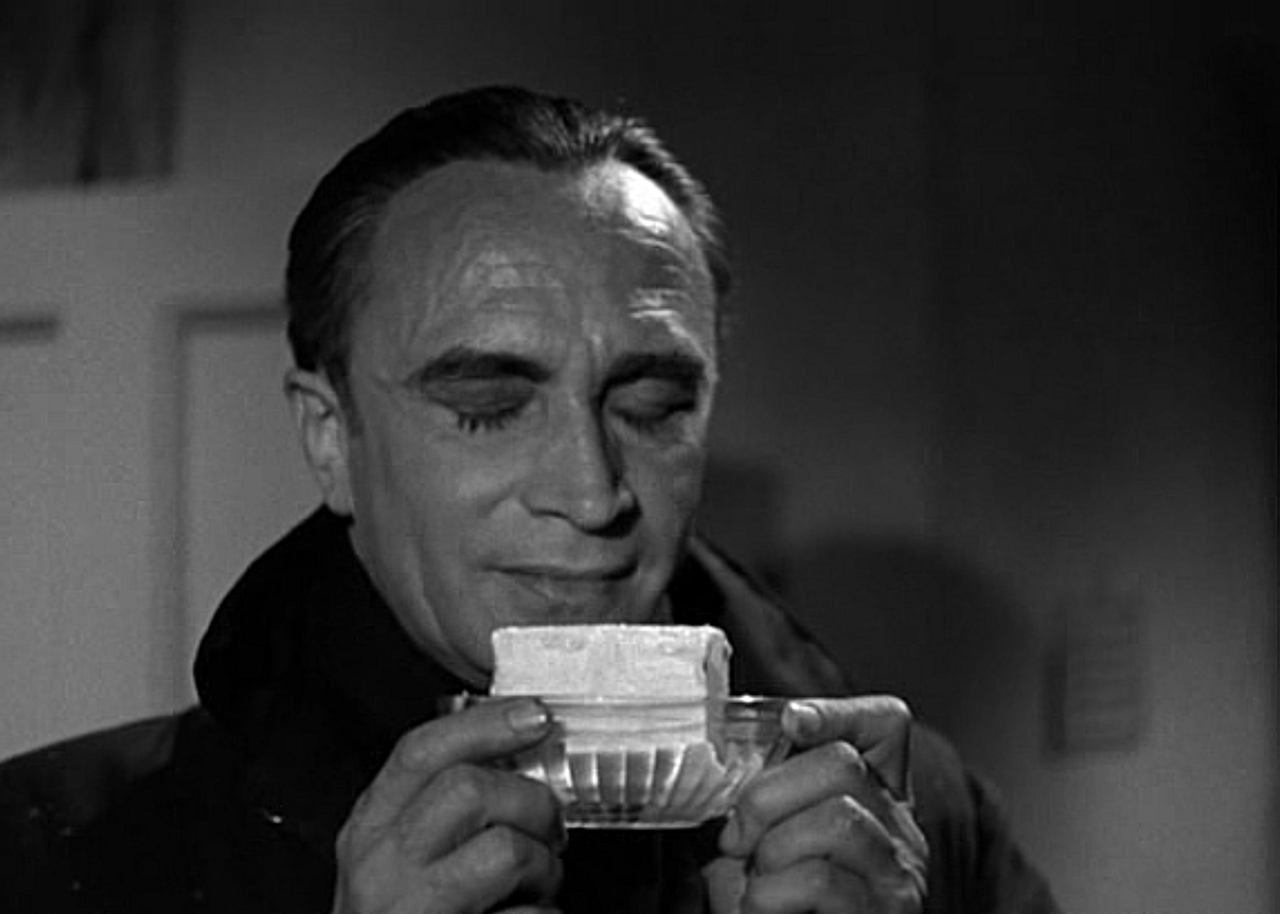 |
| "Bütter!" |
It’s played for laughs, but it's such a delightfully genuine moment. Hardt proceeds to eat most of the butter and, like, half a ham before collapsing, but not without first lighting cigarettes for himself and Thiel, this long awaited meal acting as a stand in for some kind of erotic encounter. Even though they spend most of the film flirting like pros, sharing a decadent meal is the closest they get to hooking up.
According to Powell, the film's budget was £47,300, approximately £3.4M in 2026 and a mere fraction of what it costs to make a movie today. This was before the war when budgets would be slashed even further. This figure was supposedly even less than Veidt's salary, which Powell guessed could have been as much as £50K at the time. Adding stress to the studio's pocketbook, Powell insisted on shooting on location, at least for the exteriors. After much back and forth, he was allowed to bring his crew up to Scotland but the actors had to stay in London.
Production on The Spy in Black began towards the end of 1938 and was slated for release the following spring. While England didn’t officially enter the second world war until September 1939, one could imagine the threat of conflict was making the general population anxious. The Spy in Black is set in 1917, but unlike other cinematic narratives of the 1930s centered around past wars, this film doesn’t go out of its way to glorify the military or present a particularly nationalistic story. All of the characters are heroic and all of the characters are flawed, none more so than the man at the center of the film, Captain Ernst Hardt, a German U-boat captain. It was a big risk making a film with this kind of protagonist at this time. Yet Spy doesn’t make any kind of sweeping judgement, positive or negative, about the Germans. It seems more likely that with the next war looming, Hardt is less of a statement about Germans in general than a way to telegraph to British audiences that this specific outsider, i.e. Conrad Veidt, this actor mainly known as a screen villain, is a good man. He’s one of us, it seems to suggest.
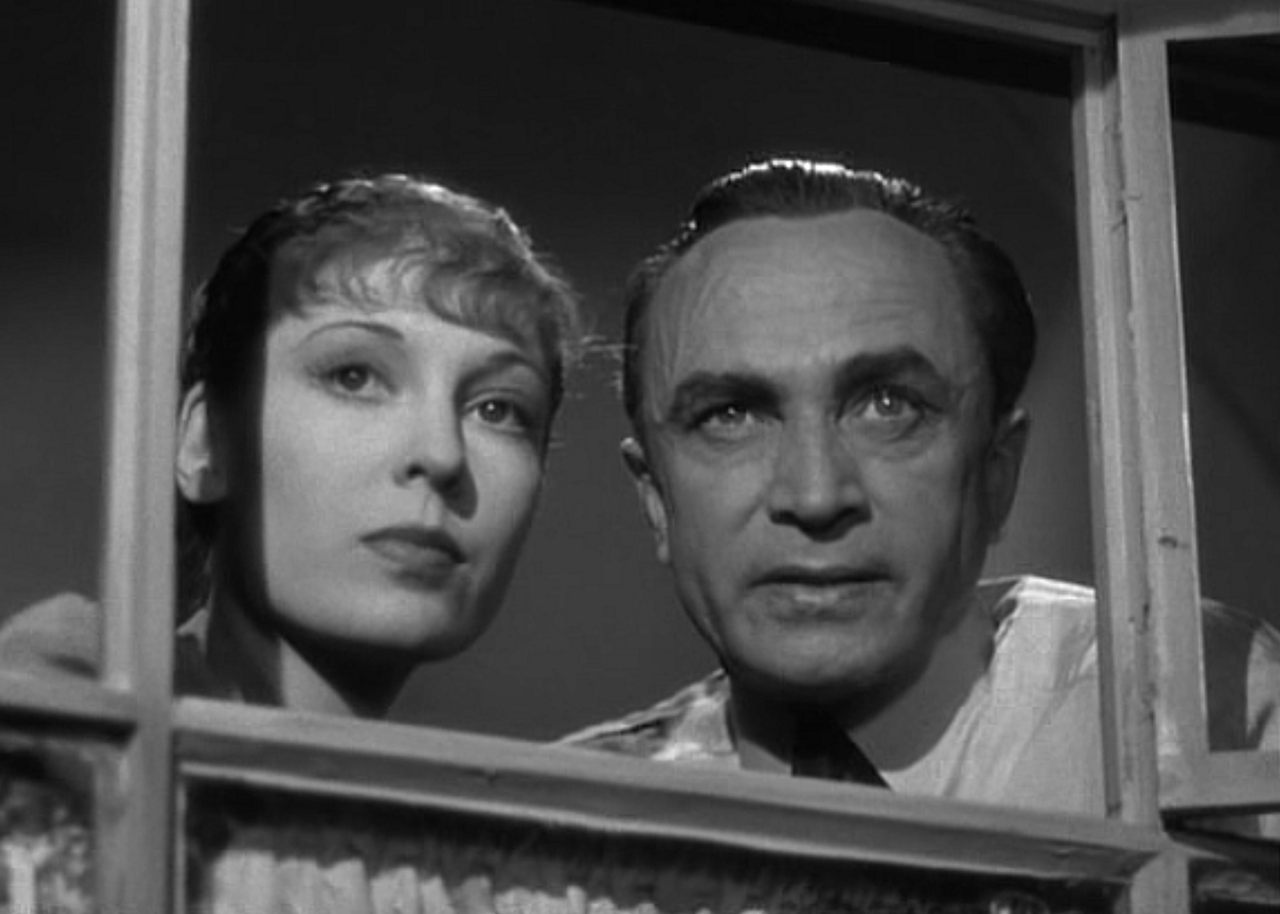 |
| Valerie Hobson and Conrad Veidt watch the battleships on the bay through the schoolhouse window |
Valerie Hobson was apparently cast in order to replace Vivien Leigh who was too expensive and the studio probably couldn’t afford both her and Veidt. It didn’t really matter for Leigh; shortly afterward losing the role in Spy she was offered the lead in Gone With the Wind. It worked out because, speaking frankly, and I may get hate for this, Hobson is the better actor. She's more charismatic than Leigh, has better chemistry with Connie (see 1937's Dark Journey), has more range and better comedic timing.
Here we get to see the beginning of this fruitful collaboration, see the sparks fly as Veidt and Hobson expertly handle the dialogue and action. I love their dynamic on screen: Hardt deferring to this woman that he thinks is his superior; the way she corrects his English and barks at him to go to bed; the way she looks at him at the end of the film with heartbreak in her eyes but can’t bring herself to say anything at all. They have so many great moments together in this film, it’s impossible to pick a favorite.
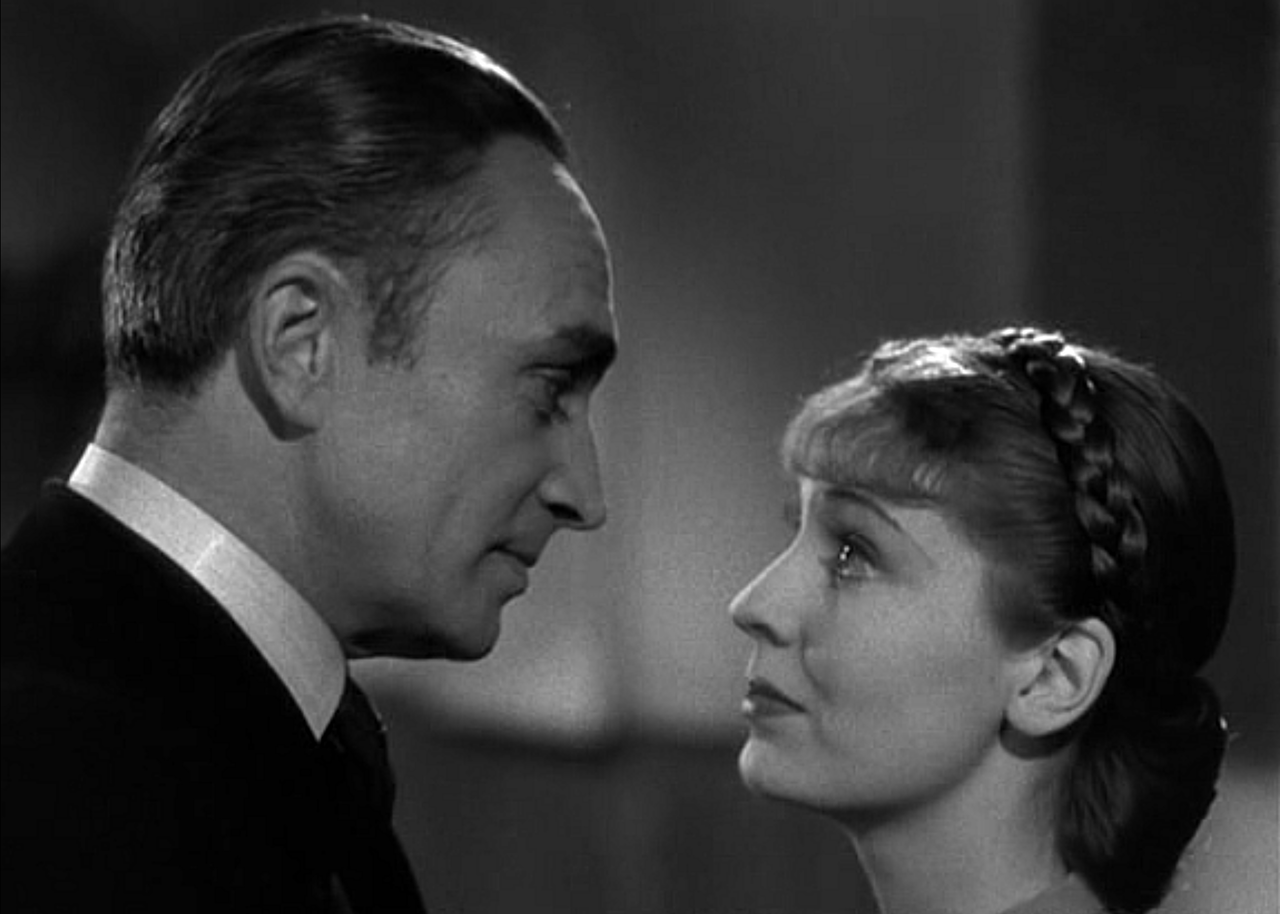 |
| "It is evening... and I am grown up." |
To Powell, Conrad Veidt "was invention, control, imagination, irony and elegance… one of the most romantic and magnetic men alive." The two of them worked together to create "a real man with a man's appetites and resourcefulness." Mission accomplished. Connie genuinely seems like he’s having a blast on this film. After a series of films that flopped in the UK, he was finally allowed to play a more interesting and fully realized character, to bring in more of his own opinions and creative choices.
As a captain, Hardt is all business but endures lighthearted teasing from his shipmates. He’s even allowed to have a friend. Hardt and his first mate Schuster, played by frequent featured actor with the Archers Marius Goring, clearly have history. They speak comedically in unison, and Hardt remembers to bring Schuster a block of that precious butter. That’s real friendship.
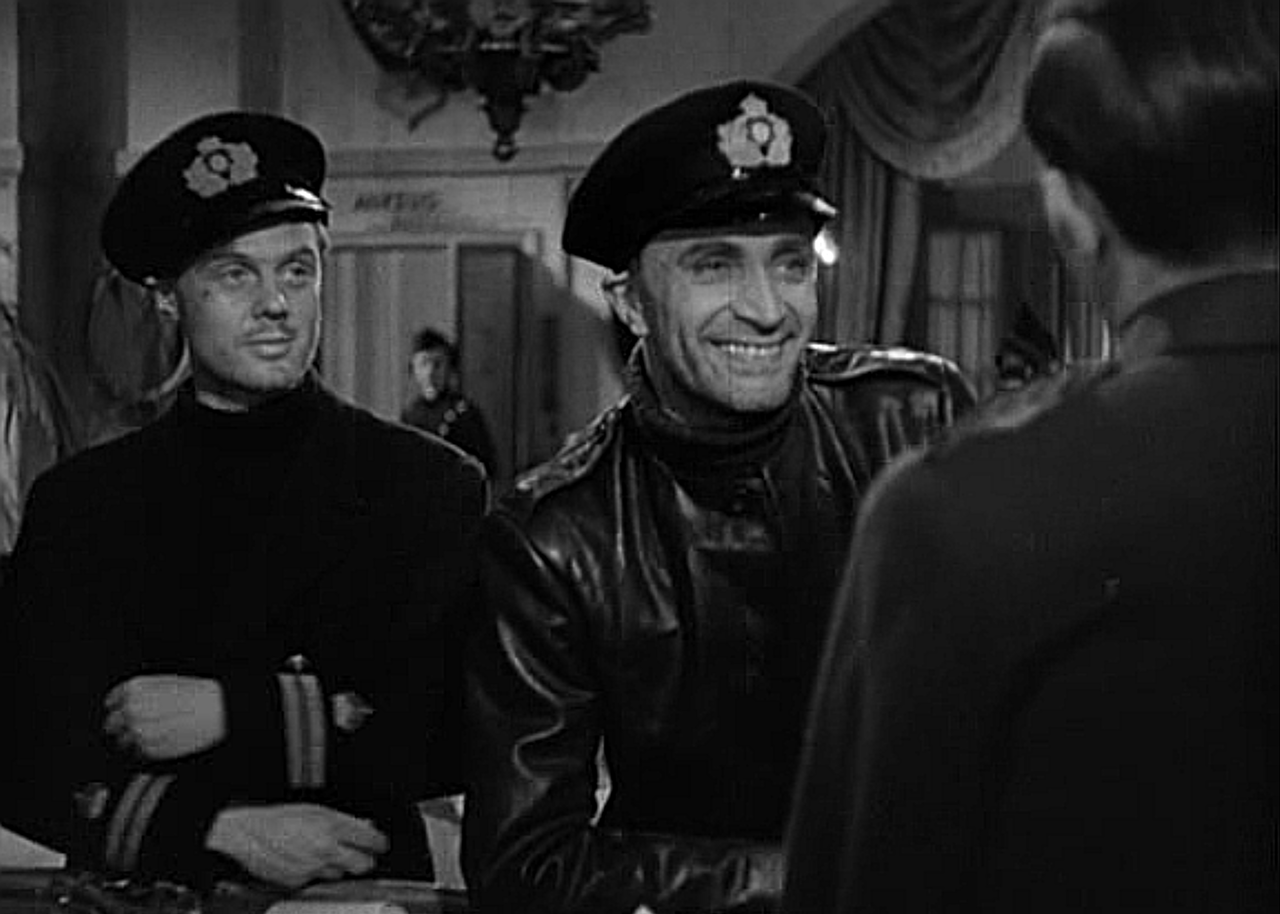 |
| Schuster and Hardt arrive at the hotel in Kiel |
Hardt is gruff, impatient, and sardonic. When the vicar shows up and sees the medal ribbon on his uniform, Hardt slyly and proudly states that it’s the “Iron Cross, second class.” And when the vicar then assumes Hardt must be a prisoner of war, the captain replies, slowly drawing his pistol, “No… You are," with the most perfect, calm confidence of a man who is certain he holds all the cards.
Hardt is ultimately a reluctant spy. When he receives his orders, he’s definitely annoyed. He grumpily accepts them, but as a decorated officer doing spy stuff is simply beneath him. He even insists on wearing his uniform at the schoolhouse when he’s supposed to be in hiding, because if he should happen to die in service of his duties, he’d rather meet his end as Captain Hardt, not as anyone else.
He's so wrapped up in his identity that it ends up killing him. His end is tragic, nearly Shakespearean. Hardt is not without honor, in fact he’s positively full of it. He seems born and bred to follow orders, to whatever end they may have. And yet he is not a bad man. He commands authority but does not wield it with cruelty. He tells his crew to shoot any of the prisoners on the captured ferry who make noise, “with one exception” for a crying infant. Later when the ship is sinking, he allows everyone, even the prisoners, to escape on the lifeboats.
Hardt cannot stop his own men from firing on the ferry, what they think is an enemy ship – they have no way of knowing Hardt has taken over command of the ferry. His desperate and helpless cries can’t carry over the water to reach them in time. The ferry slowly sinks and everyone, including the vessel's original captain and crew, disembarks. But Hardt makes the decision, in his mind the only decision, to stay behind.
The last time we see Hardt in closeup, he has tears in his eyes. We don’t see him drown, but we watch as an abandoned lifejacket floats across the frame. It’s heartbreaking. We’ve really gotten to know him, this flawed and complicated man, and maybe even love him, over the course of the film.
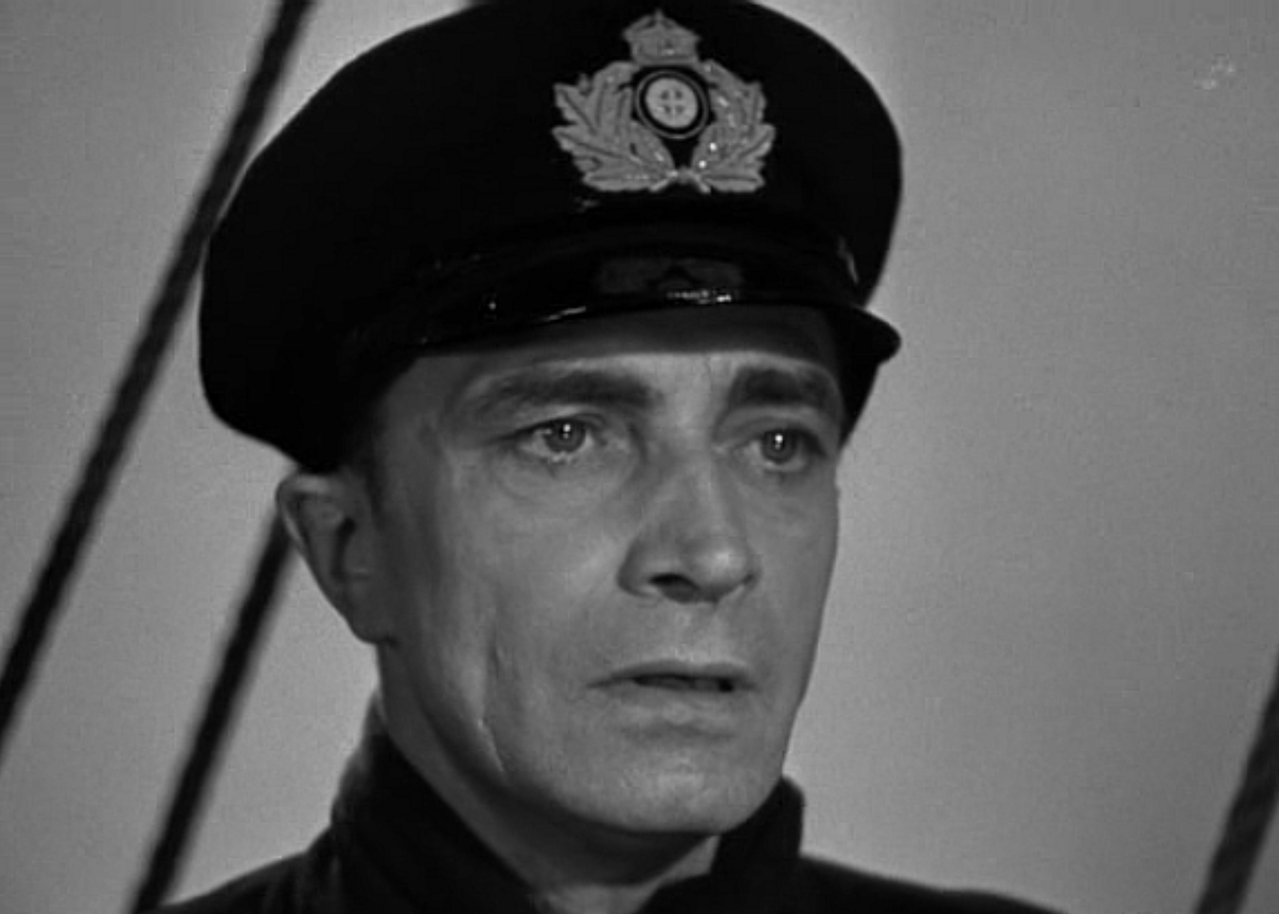 |
| "It was my own ship that sank us." |
The Spy in Black focuses primarily on how each of the main characters are personally affected by their actions, and how those actions affect others. Powell and Pressburger made the smart decision to dial in on the individuals rather than the nations they represent. While the espionage in the film is played out with slick intrigue, by the end of the movie Hardt and Mrs. Blacklock are both full of regret. Everything they’ve done has led to the deaths of people who had lives and families, people who loved them. No amount of honor or devotion to one’s country in wartime can wash the blood from their hands.
In Mrs. Blacklock’s case, I don’t believe her heart was ever truly in it. She breaks down on the captured ferry and says, “You’re in the hands of a man [Hardt] who cares nothing for his life or yours. And it’s all my fault. I forgot we were at war, forgot that war means that it kills every fine, decent human feeling.”
And Hardt himself, for all his good intentions and humanity, loses every one of his crewmates, men who may have been the only people he cared about in the entire world. Having lost them, having not been able to protect them from that fatal depth charge, he has nothing left to live for. The machine of war, or more accurately the psychology of war, claims Hardt as yet another victim.
The real villain of The Spy in Black is not the German naval captain but rather the war itself. Under all the suggestive dialogue and clever cinematography, The Spy in Black is, at its heart, an anti-war movie.
---
Keep an eye out for Veidt & The Archers, Part 2, where I get into their follow-up, 1940's Contraband.
---
RESOURCES:
- Conrad Veidt On Screen, John T. Soister
- A Life in Movies: An Autobiography, Michael Powell
- Emeric Pressburger: The Life and Death of a Screenwriter, Kevin Macdonald
- Made In England: The Films of Powell and Pressburger, dir. David Hinton

No comments:
Post a Comment