
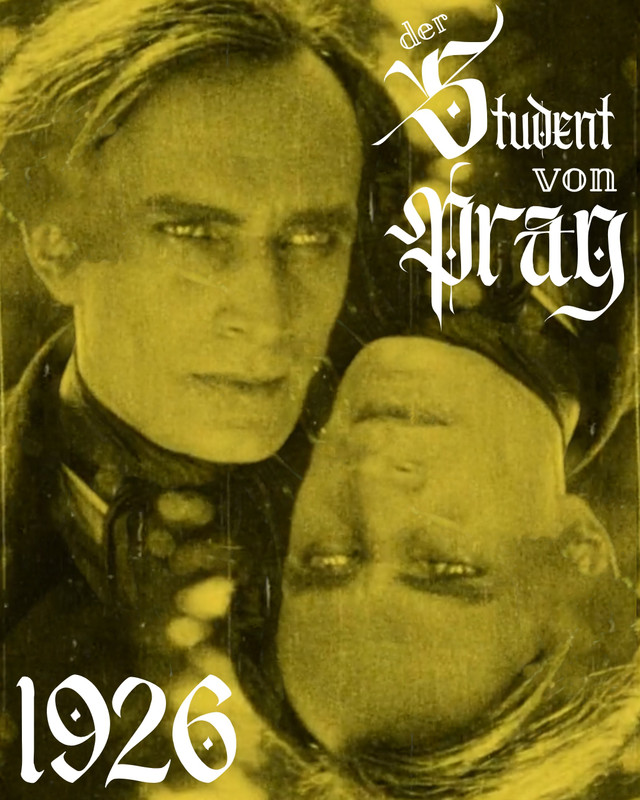
Next month will mark the 100th anniversary of 1926's The Student of Prague, one of the most beautiful and interesting films of Conrad Veidt's career.
A hundred years feels like a long time ago. Probably because it is. But like many silent films, The Student of Prague retains a peculiar timelessness.
Despite being an incredibly successful film in its time, playing to sold out theaters and praised by critics for Veidt's performance and the stunning visuals, The Student of Prague is rarely included in the primary Weimar film canon. Maybe that's because, while technically a genre picture, it's not a textbook example of German Expressionism (although not all German filmmakers were working in that style anyway). Or maybe because, when it comes to directors of Faust adaptations, Henrik Galeen doesn't have the same prestige or name recognition as F. W. Murnau. But I don’t know, maybe some film scholar somewhere can explain this to me one day because the movie I just watched absolutely without a doubt holds its own against classics like Metropolis and The Cabinet of Dr. Caligari.
There is a bewitching quality to The Student of Prague. From Conrad Veidt's dual performances as both Balduin and his Double to the atmospheric cinematography and special effects, it really stands out as a dark and dreamy supernatural period piece.
Veidt considered this film one of his personal favorites and his intense, soul-deep dedication to his leading role is obvious. It's one of my own favorite Veidt performances as well. I first watched this film during the fall of 2023, and something about that memory will forever make me connect The Student of Prague to the autumnal changing of the seasons. I want to live inside this movie. It's one of those films that, in spite of its faults, sweeps me effortlessly into the world of the story.
With each subsequent rewatch, I find myself reacting differently. Previously, I had felt like it was too slow, that the story dragged and the pacing could have been tighter. But this time I really enjoyed that slowness, how it takes its time to not only establish but to savor the spaces between the action. These long takes help to conjure the spell the film casts over its audience, the way Scapinelli weaves his magic to draw Balduin and Margit together.
I also found myself reacting differently to Balduin. On my last viewing, he came off as obnoxious and entitled, whereas this time I had much more empathy and understanding for Balduin as someone subjected to the consequences of bad choices made out of youthful desperation.
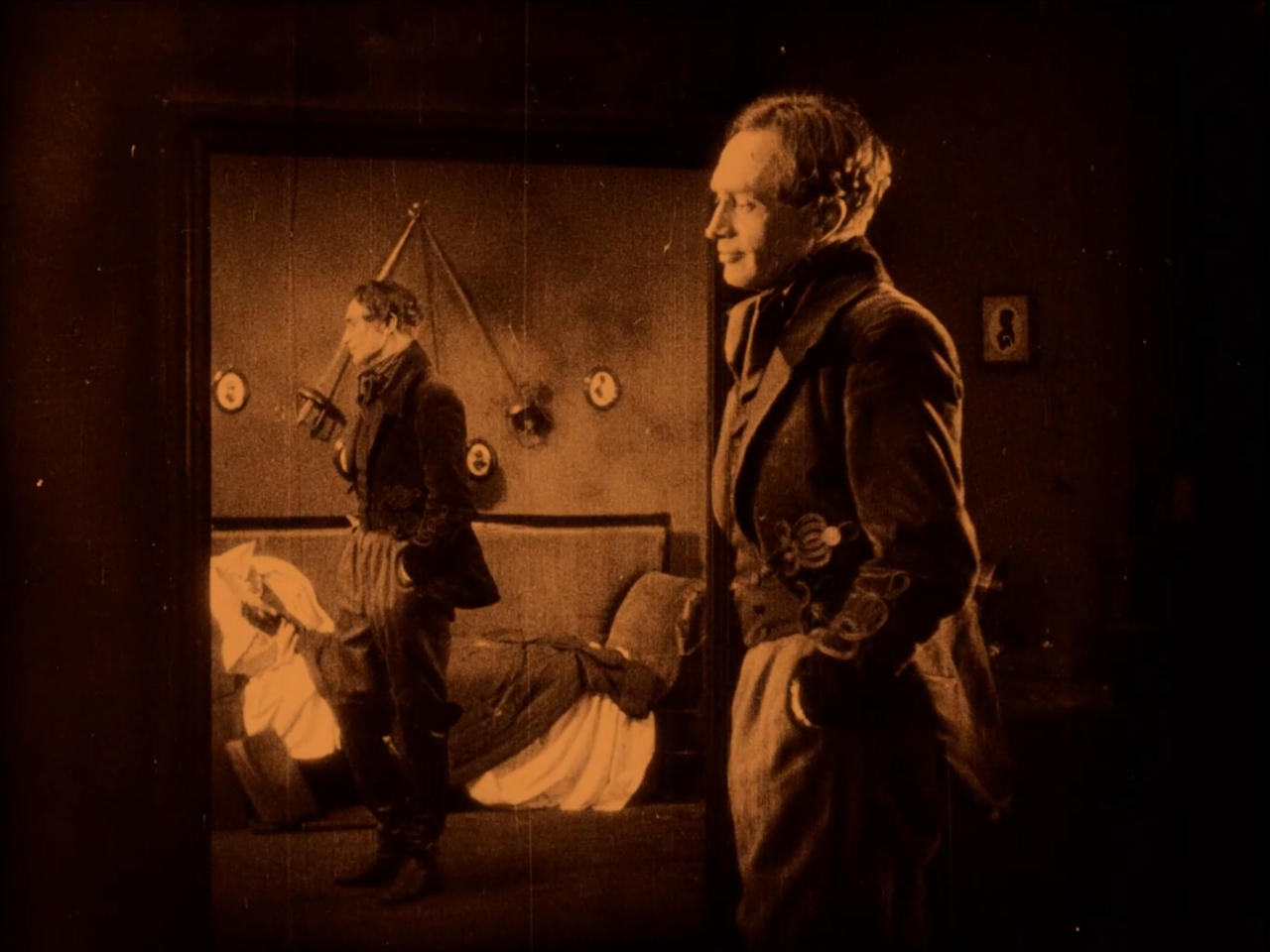
This also just to be the first silent film I've covered on the blog (not including Liebe macht blind which I haven't actually seen). Its 100th anniversary has something to do with that. But, frankly, the silent era was a blind spot for me for most of my movie-watching life. But I've really come to respect this era of film history thanks in part to Conrad Veidt. Something interesting happens emotionally and/or psychologically when I watch a silent film. I think about all the people 100+ years ago either behind or in front of the camera, all the hands and minds and eyes that went into making these movies, all the talent and skilled labor and creativity and personalities, the artists who left behind these stories and images. Sometimes I feel like there's something vaguely haunted about silent film. How lucky we are to be able to enjoy the residual artifacts of these people, these ghosts who never knew their work would be so lovingly restored and stewarded into a new century.