I play the greatest meanie in the world. I befriend a girl who has never had a friend, and then, when she falls desperately in love with me, I try to make her the instrument of a terrible vengeance against my fate. If only I can make people feel this man, this spirit of evil, is an unhappy human being. Sick with unhappiness, the unhappiness of Lucifer, the angel cast out of heaven. If I can do it as I see it, other unhappy people will feel they're lucky by comparison. And even happy people will have a little sympathy for him.
- Conrad Veidt, "Villain By Accident" by Betty Harris, Modern Screen, June 1940
---
A Woman's Face is a strange film. In some ways it's very ahead of its time, while in others it tips into the realm of what director George Cukor called "conventional melodrama." The story itself doesn't really make a lot of sense, but the film does work as a challenge for its actors, especially Joan Crawford, and because Cukor clearly had a unique sensibility that translated a weird and somewhat soapy plot into a relatively layered and complicated film.
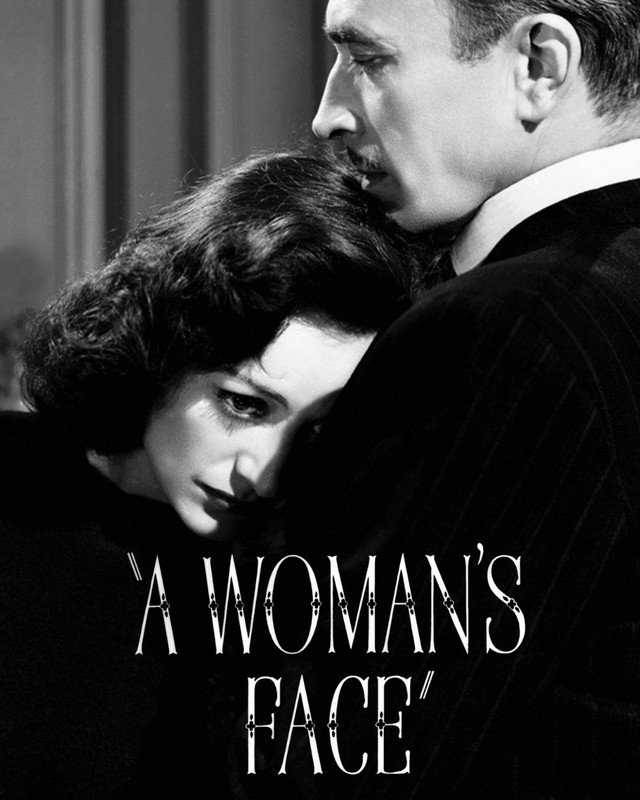
Conrad Veidt reportedly called his character, the villainous Torsten Barring, "Lucifer in a tuxedo." Torsten truly embodies the fallen angel's narcissistic ambition and sadism. No stranger to playing infernal bad men, Veidt had played the Devil himself twice in the silent era (Satanas, 1919; Kurfürstendamm, 1920) and Barring is repeatedly described as satanic in almost every review of the film. It's an almost camp performance that somehow still reminds us that Torsten is all too human, perhaps uncomfortably so.
For me, A Woman's Face was the point of no return early on in my initial deep dive into Veidt's work. This film is genuinely unusual and fascinating, even for a modern audience; from Veidt's and Crawford's masterful work on screen to the implications of the story itself, A Woman's Face stands out from a lot of other big studio fare in the early '40s.
---
Welcome to Part Two of Conrad Veidt in Hollywood, my blog series exploring the films Veidt made under the American studio system in the early 1940s. Part one covered his first film back in Hollywood in over a decade, 1940's Escape, which can be found here.
With the success of Escape, Conrad Veidt became an official contract player for MGM. A Woman's Face was his first follow-up under Louis B. Mayer and saw him working with director George Cukor again, an uncredited co-director on Escape, a project Cukor was originally slated to helm, but MGM passed on him because they thought he wasn't suited to the material. They did however call Cukor in to direct re-shoots and additional scenes once principle photography had wrapped on Escape.
If the character relationships were complex in Escape, A Woman's Face takes it even further. There is a subversive cast over this film, especially for the time in which it was made. Today, the Hollywood films of the 1940s aren’t typically considered overly-complicated, although the trauma of the war and the rise of film noir brought a new psychological landscape to filmmaking later in the decade. A Woman's Face is not noir, though. It's a bizarre, dark little jewel I keep finding myself turning over and over after each subsequent rewatch.
And so, before I get into the film itself, I wanted to briefly address the production standards of the era, namely the infamous Motion Picture Production Code.
---
MPPDA Certificate for approval in the opening credits for A Woman's Face
Pre-Code Hollywood
The films of Hollywood's golden age weren't necessarily always family friendly. Early Hollywood films made in what's called the Pre-Code era were often more modern in tone and subject matter than we give them credit for today. Pre-Code films could be unflinching in their depictions of humanity's dark side. Both male and female protagonists were allowed to be flawed, relationships were messy, and queer characters, while usually still portrayed as cringey stereotypes, were at least visible. In these films, you might see drug addicts, sex workers, heroic gangsters, adultery, domestic violence, suicide and self-harm, the list goes on.
While early Hollywood was busy churning out these movies, individual states were passing their own censorship legislation. Each state's laws were slightly different, some tougher than others. On top of that, there were also local and national religious coalitions who vehemently opposed the supposedly immoral content being presented.
Hollywood didn't want to lose ticket sales to these regional boycotts, nor did they have time to re-edit each and every new film to meet the approval of all the different censorship boards. So as early as the 1920s, the studios instead opted for self-censorship. This was done not so much to appease religious conservatives but to avoid national government oversight, and studio executives weren't about to share their profits with politicians in Washington.
Adding to the moral panic were a number of unfortunate and disturbing scandals in and around the film industry at this time. Press coverage of early 1920s murder investigations connected to two separate high profile members of the Hollywood elite, Roscoe "Fatty" Arbuckle and William Desmond Taylor, did a lot of damage to Tinsel Town's glamorous image in the eyes of the religious Right.
When film made the transition to sound technology in the late 1920s somehow everything got even worse, at least according to the leaders of the moral panic. It was one thing to see taboo things on screen, but a whole other thing to actually hear people talking about them. So the Motion Picture Production Code became the law of the land.
The Hays Code
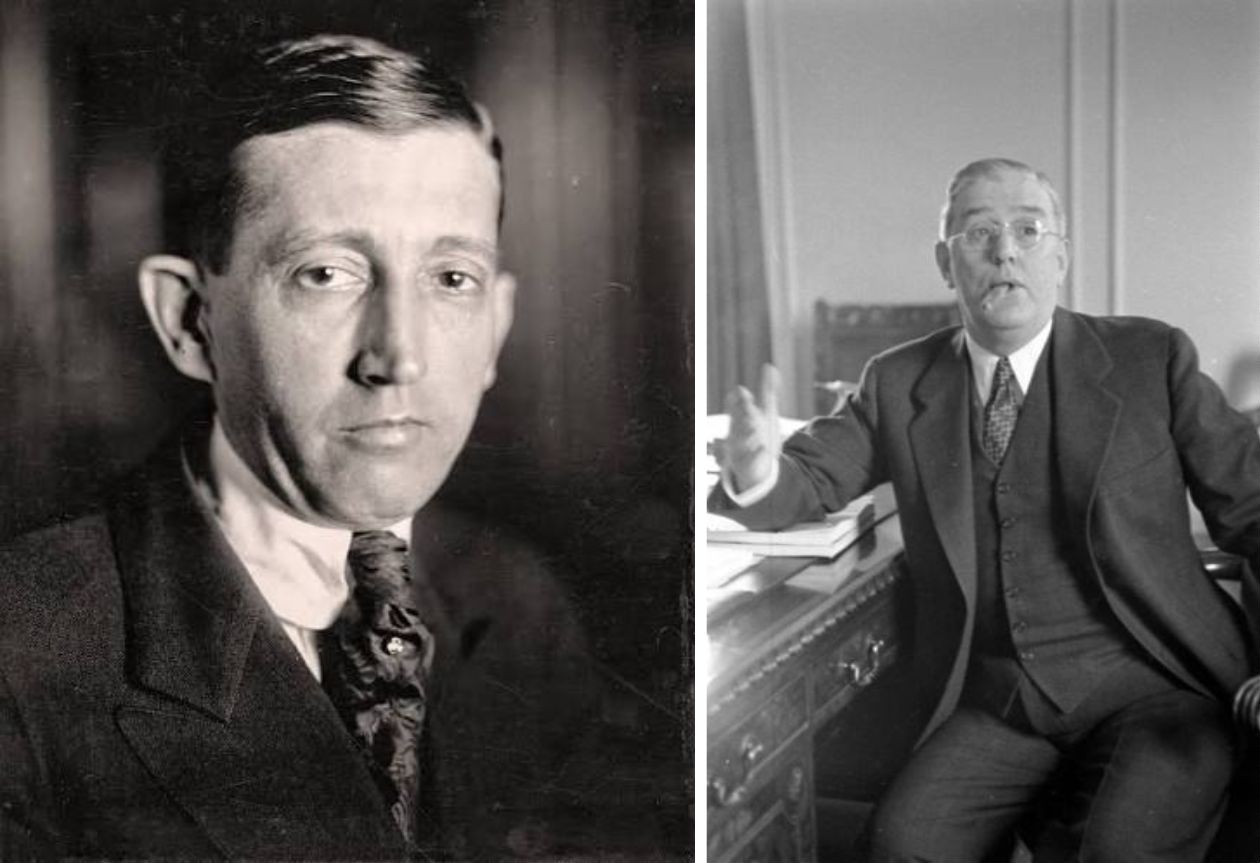
The Code, which had been a work in progress for a few years, was officially implemented by the Motion Picture Producers and Distributors of America (MPPDA) in March 1930. The major studios and MPPDA president, Will Hays, agreed on a set of conditions for all widely-released films going forward. These conditions were an evolution of an already existing list, created by Hays, of content deemed inappropriate for general audiences.
The absolutely forbidden things on this list included sexualized nudity, both regular and religious profanity, criticism of the Church, sex work, sexual health, homosexuality (referred to as "sexual perversion"), drug trafficking, miscegenation or interracial relationships, etc. Studios were also required to exercise caution around topics such as pretty much any criminal act, criticism of law enforcement and public institutions, the death penalty, religion generally, sexually suggestive content (even kissing), not to mention anything that could be considered critical of the United States or other nations.
Beginning in 1934, if a film was released without approval from the Production Code Administration (PCA), the studio would have to pay a $25,000 fine. This was likely intended to curtail any filmmakers who thought they could just ignore the Code in order to deliver "racy" films still considered entertaining by most audiences.
The Production Code may be named after Hays, but the man in charge of oversight as head of the PCA was virulent antisemite Joseph Breen. Under his strict enforcement of the Code, filmmakers had to get even more creative with how they would address any and all issues deemed morally reprehensible and thus unmarketable.
Will Hays and Joseph Breen
As with A Woman's Face and many other films, filmmakers found ways to signal to their smarter audience members certain things that went overlooked by conservative leaders and lawmakers. They would also distract the censors by adding scenes into the movies they knew would get cut (ex. graphic nudity) so other things could slip through the cracks.
This shift in culture and expectations also found its way into the personal and public facing lives of people in Hollywood in the 20s and early 30s. Queer actors, actresses, and filmmakers would enter into lavender marriages with opposite sex partners in order to save their careers or else be forced quit the business altogether. Others who went against the established social norms would try to present a seemingly wholesome public image so they would fit into this new conservative American idyll, a perfect family with happy children… at least for the press.
After WWII, the pendulum began to swing back in the other direction with post-war film noir and other emerging genres and styles that looked more seriously at the many ways physical and existential trauma affects people. Films once again began to show extremely complicated characters and stories made by artists who offered a more nuanced look at the human condition.
But The Code, officially dismantled in the late 60s with the collapse of the studio system, was still ever-present when production began on A Woman's Face.
---
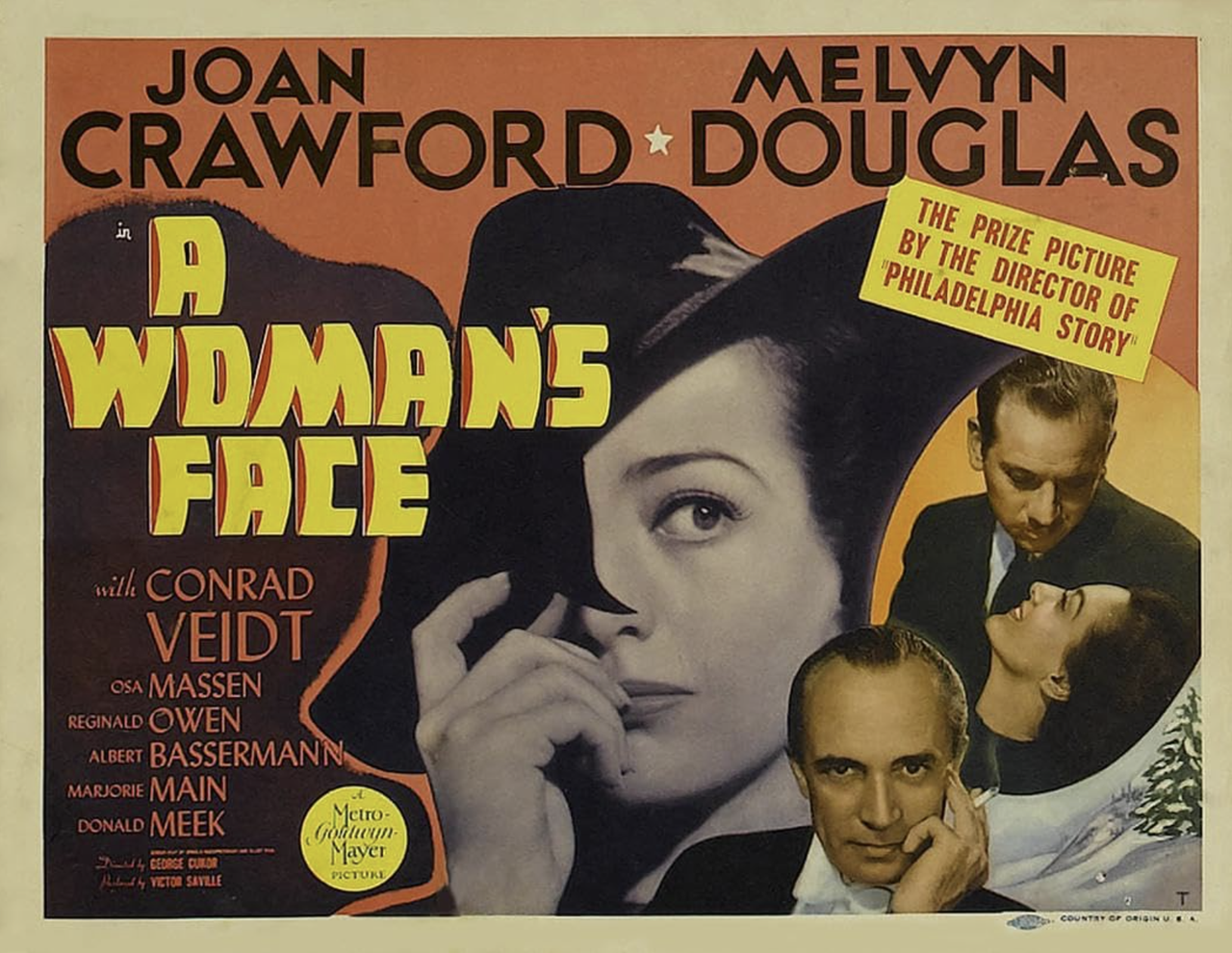
A Woman's Face lobby card
A Woman's Face, 1941
Dir. George Cukor
Wr. Donald Ogden Stewart & Elliot Paul, based on the play Il était une fois… by Francis de Croisset
Starring Conrad Veidt, Joan Crawford, Melvyn Douglas, Osa Massen, Albert Bassermann
Told through a series of witness flashbacks during a murder trial, A Woman's Face is a case study in character development for its central protagonist, Anna Holm (Joan Crawford). Anna, disfigured by burn scars covering half of her face since childhood, is a hard-hearted business owner and small-time crook who is charmed into becoming accessory to murder after meeting smooth talking playboy, Torsten Barring (Conrad Veidt).
One of their schemes leads to a chance encounter between Anna and Dr. Segert (Melvyn Douglas), a plastic surgeon. Segert believes Anna's scars are what make her a criminal, and when he offers her the opportunity for life-changing radical reconstructive surgery, she accepts.
Glamorous post-op Anna returns to Torsten still willing to do his bidding, even agreeing to help him dispose of a young cousin, a literal child, who stands to inherit the Barring family fortune. Anna assumes the identity of governess to the little boy at the Barring mountain estate in order to get close to him.
One day while out skiing she has the opportunity to push the boy from their sky car high over a rushing river but her conscience ultimately gets the better of her. Torsten is livid and takes matters into his own hands. He abducts the boy and tears off in the snow to finish the job Anna started. Anna and Segert chase after Torsten's sleigh, eventually catching up. Anna shoots Torsten who falls into the river, leaving the boy unharmed.
During court deliberations back in the present, Anna confesses to Segert her desire to live a good life, to be a good person, prompting a marriage proposal from the doctor. The film ends with the two of them walking back into the courtroom together to receive her verdict.
Promotional photo of Conrad Veidt, Joan Crawford, and Melvyn Douglas
By 1941, George Cukor was already a very accomplished director, having worked with Crawford previously on films such as The Women (1939) and Susan and God (1940). His extensive list of hits also included Little Women (1933) and The Philadelphia Story (1940). He was known for being a "women's director" who made "women's pictures", which I think just means he was sensitive with his actors rather than being a tyrant, and that he made films with strong, multi-dimensional female characters, and A Woman's Face is no exception.
It was essentially an open secret that Cukor was gay, and he was lucky enough to have a large circle of ultra famous friends who supported him. He was protected by his home studio, MGM, despite the overarching culture of conservatism and anti-queer sentiment reinforced by the men in charge of policy in Hollywood.
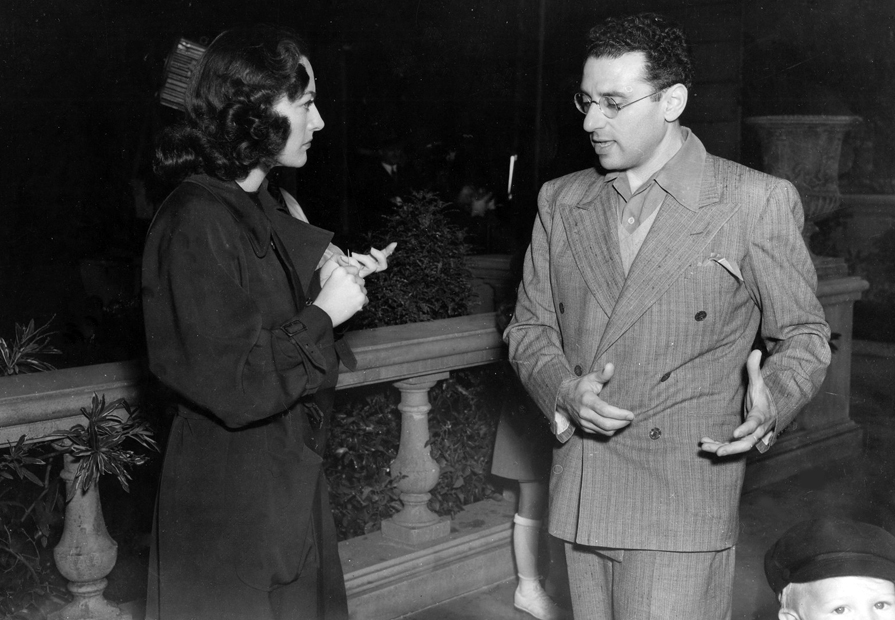
Crawford and Cukor on set
Joan Crawford had been on screen since the mid-1920s, but her breakout was MGM's The Unknown directed by Dracula's Tod Browning. Even her early career had its ups and downs, and though she had a reputation for being overly made up and styled, she was known for playing women who resonated with every-day people. Her characters had struggles, they weren't ultra glamorous, and were often flawed.
Her relationship with Cukor was one of the better ones of her career. They seemingly had a lot of mutual respect for one another, which probably contributed to the success of their work together.
Some sources have Cukor as the one who brought the idea to do A Woman's Face to Crawford, others say it was all Crawford's idea. Regardless, the studio was apprehensive to support this project. It's likely that Crawford wanted a challenge at this point in her career. In 1941, she was 35 years old and faced the unfortunate reality that she might struggle getting leading roles going forward simply because of her age.
Once the film was greenlit, Cukor rehearsed Crawford relentlessly. He wanted to make her delivery as flat as possible, especially in the courtroom scenes, the way someone numbed to trauma might deliver the lines. One strategy Cukor implemented was having Crawford recite multiplication tables over and over to get the "melodrama" out of her performance. The result is very affective.
Joan Crawford is arguably at her very best in this film, even though the studio thought A Woman's Face would destroy her career. She said it was this role that primed her for her Oscar-winning performance in Mildred Pierce four years later. She is electric both in her ferocity and her vulnerability, especially in the first half of the film, the most so in her scenes with Conrad Veidt. She admitted that she was inspired by Veidt's professionalism and intensity, and frankly this film and these characters wouldn't have worked otherwise. Veidt is so anti-Hollywood in his style and approach that some of his work ethic and energy must have helped pull this amazing performance out of her, one that doesn't neatly fit in any standard film archetype for a female character at the time.
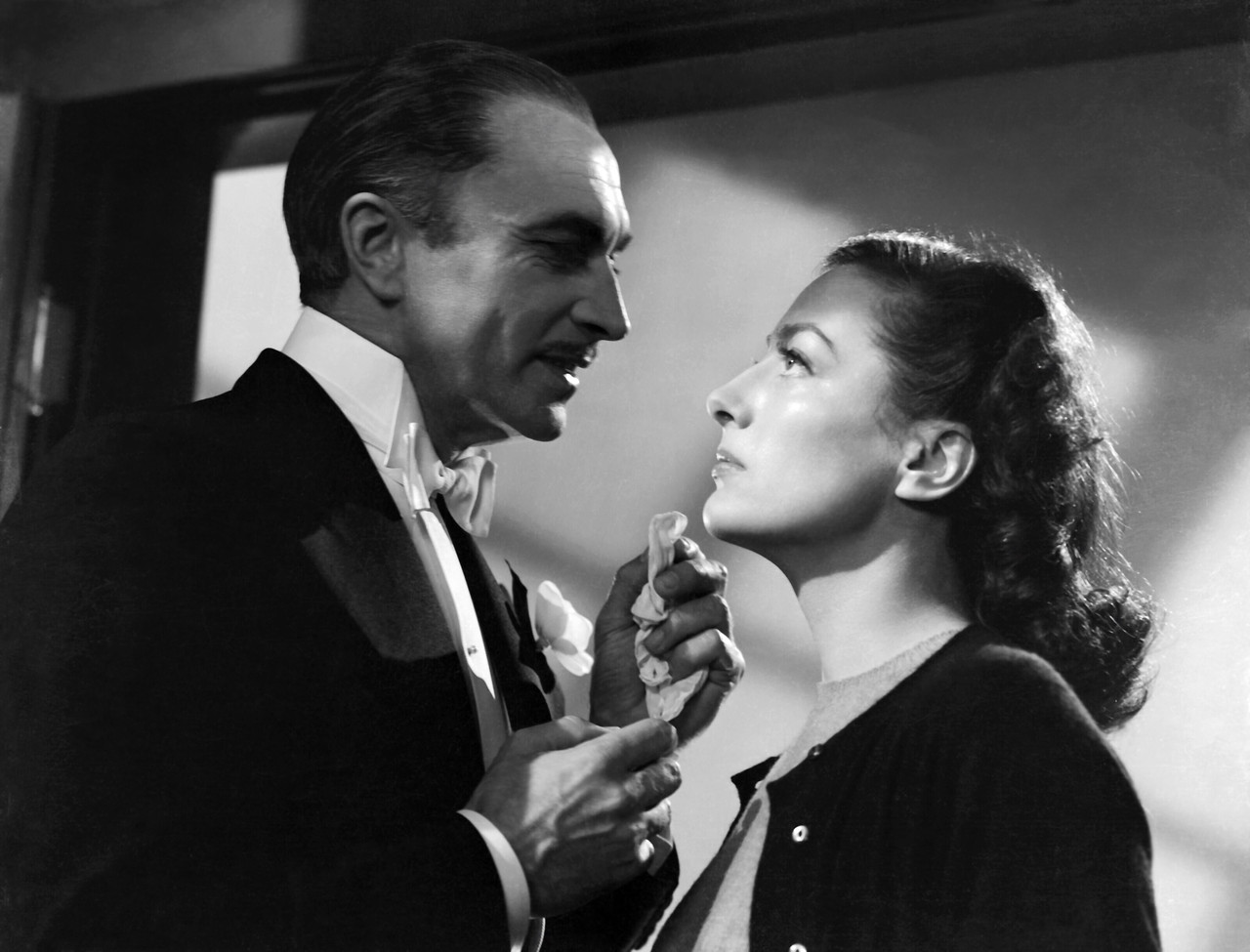
Promotional still of Torsten and Anna's first meeting
By all reports, production was comparatively easy. The tone on set was relatively light, everyone seemingly got along and they would often tease each other. Cukor had a dog at the time named Connie that he would bring with him to set, and Veidt would pretend to get annoyed about the dog who shared his name. But it was all in fun; Cukor echoed a sentiment shared by many that Connie (the actor) had an excellent sense of humor and was great to work with.
But yet, in later interviews it was plain that Cukor really didn't like the picture. He thought the back half of the film was too stereotypical for his star and perhaps not as challenging or interesting as the first act, and I tend to agree.
A Woman's Face is not generally considered a high point in Cukor's filmography by film critics either, which is interesting because the movie is not lazy. It's made extremely well and there are a lot of interesting, careful creative decisions that influence the impact of the film. But perhaps compared to Cukor's other work, A Woman's Face isn't as highbrow or as accessible because it's a little too bizarre for American cinema in the early 1940s.
There's a soft gothic look and feel to the way the movie is shot, and it was a brilliant decision to hide their heroine until well into the film. The eventual reveal of her scarred face, expertly done without any underscoring, is empathetic rather than shocking. There are a number of moments like that throughout the movie where the lack of an accompanying soundtrack or dialogue adds to the tension. Like in the scene where Anna and the boy, Lars Erik, are in the sky tram above the waterfall, or the scene of her being unbandaged post-surgery. Cutting in dramatic music or narration over these scenes would have cheapened them.
Something about the visual elements and themes of A Woman's Face almost make it feel like a dark and surreal fairy tale: beauty and goodness, how they are or aren’t connected; belonging and love; and, maybe most importantly, thinking you want one thing at first and realizing you actually wanted something else the whole time.
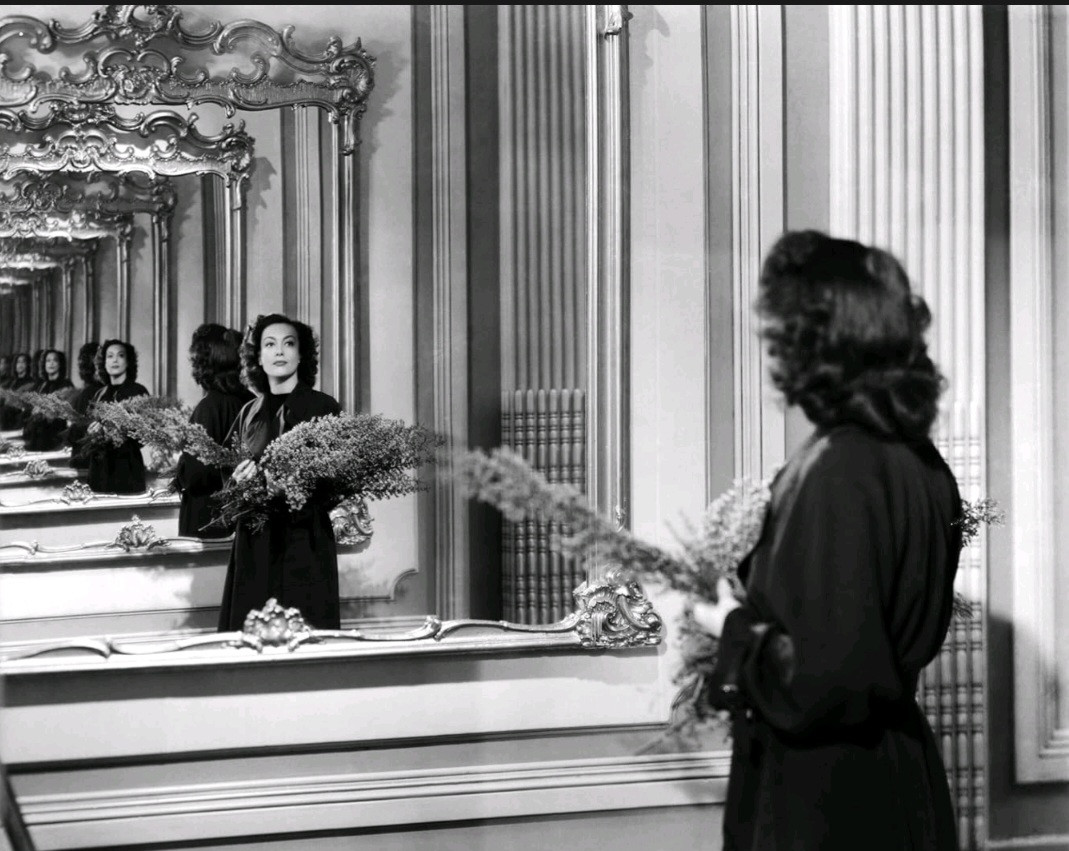
The fact that they kept the story set in Europe also adds to the fairy tale atmosphere. A Woman's Face is basically a remake of a 1938 Swedish film with Ingrid Bergman based on a play by Francis de Croisset. There is this idea of masks, whether it's Anna's scars or the slick façade Conrad Veidt's Torsten Barring has created in order to hide his inner ugliness. There's something about the proximity to and power of nature: the forest where the story properly begins, and the snowy mountains and waterfall near the Barring estate. But when Anna arrives at Torsten's apartment for the first time, it's very much the fairy tale heroine walking into the monster's castle. She has to enter and pass through two iron gates guarded by a crone (which has to be intentional, it could have been a doorman but they chose an old woman for this role). Then she has to go through the ordeal and challenge of facing her own hated reflection over and over in a long hall of mirrors before she finally reaches his door.
Promotional photo of Anna reflected in the mirrors outside Torsten's apartment
Then there's Torsten's apartment itself. It's all gilded opulence, none of the furniture looks particularly comfortable. It's more of a museum than a home. It's hard to tell if there are any windows, which means we don't get any sense of the outside world. Torsten, the Big Bad Wolf, has created in his home a seemingly beautiful and well-curated gilded cage where he traps Anna behind closed doors and with his body language.
The religious references in the film are maybe are a little obvious, and the allusions to saints, whether specific or general in regards to Anna, may be too on the nose. But she and the audience both know she's not saint-like, even at her best. All the talk about God seems to center around Doctor Segert, which really only makes sense because he's a surgeon, and what do surgeons do if not play god?
Promotional photo of Dr. Segert with Anna, post-operation
In the modern sense, A Woman's Face is a queer movie in that it queers traditionally accepted expectations. However, it really only does so in the context of Anna and Torsten's criminality. That said, the film does include a clear reference to same sex relationships in the opening flashback scene at the restaurant where two beautiful women slow dance together. Somehow Cukor got this past the Production Code officers, but again very likely only because this supposedly lesbian couple is only seen once and only with the film's villain.
Anna's obsession with Torsten is by no means the only subversive relationship in Hollywood during the Hays era. But the choices made by the actors and the director add an additional dimension to their on-screen chemistry.
In the first half of the movie, they're doing this dance of gender roles, back and forth, each being the pursued and the pursuer. But it’s not the same kind of playful subversion of, say for instance, a Katharine Hepburn film. There's a darker edge to the way Anna and Torsten handle each other.
Crawford's Anna, before her reconstructive surgery, is tough and hardened to the world. She's embittered because of the way she looks, through no fault of her own. She projects her own unhappiness onto others, understandably so. It's inferred that she was cast aside by polite society simply because of her facial scarring. But the way Joan Crawford plays this early version of Anna could be read as traditionally masculine. She uses her lower register, hardens the edges of her voice, and holds herself with controlled confidence even though it's all part of the mask she wears to hide how vulnerable she really is.
Veidt's Torsten on the other hand downplays his masculinity to act as a counterpoint to Anna. He fawns over her when she comes to visit him, and even though it's all a charade in order to manipulate her, he plays the role well. Connie plays Torsten as though he knows force alone won't win Anna's trust and complicity.
There are clear indications of sadism and dominance in how Torsten handles and speaks to Anna, and in the way she reacts and responds to him in turn. He clearly has a hold on her psychologically, and physically, that it appears difficult for her to shake. It's not explicit that this sadism carries over to their sexual relationship, but it's definitely implied -- the way Torsten holds and pinches Anna's arm at the party, his hand around her neck in the attic scene, even the way they silently look at one another.
Of course, they were only able to get away with any of this because Anna inexplicably winds up with the doctor, played by the serviceable but admittedly much less interesting Melvyn Douglas, in the end.
On paper, Torsten Barring is entirely ridiculous. He's a cad, a blackmailer, and a playboy who gets by on other people's money. But if a script did not provide enough backstory or motivation, Connie would always go above and beyond to craft a whole inner world for these bad men in order to flesh them out.
Torsten's evil is insidious. He may not exactly be a wolf in sheep's clothing, but he does wear this façade that continues to slip by degrees through the film so that by the end he can barely contain the slavering, glassy eyed monster underneath. There are moments even early on when you can see through his carefully crafted mask, one so much more nefarious than Anna's.
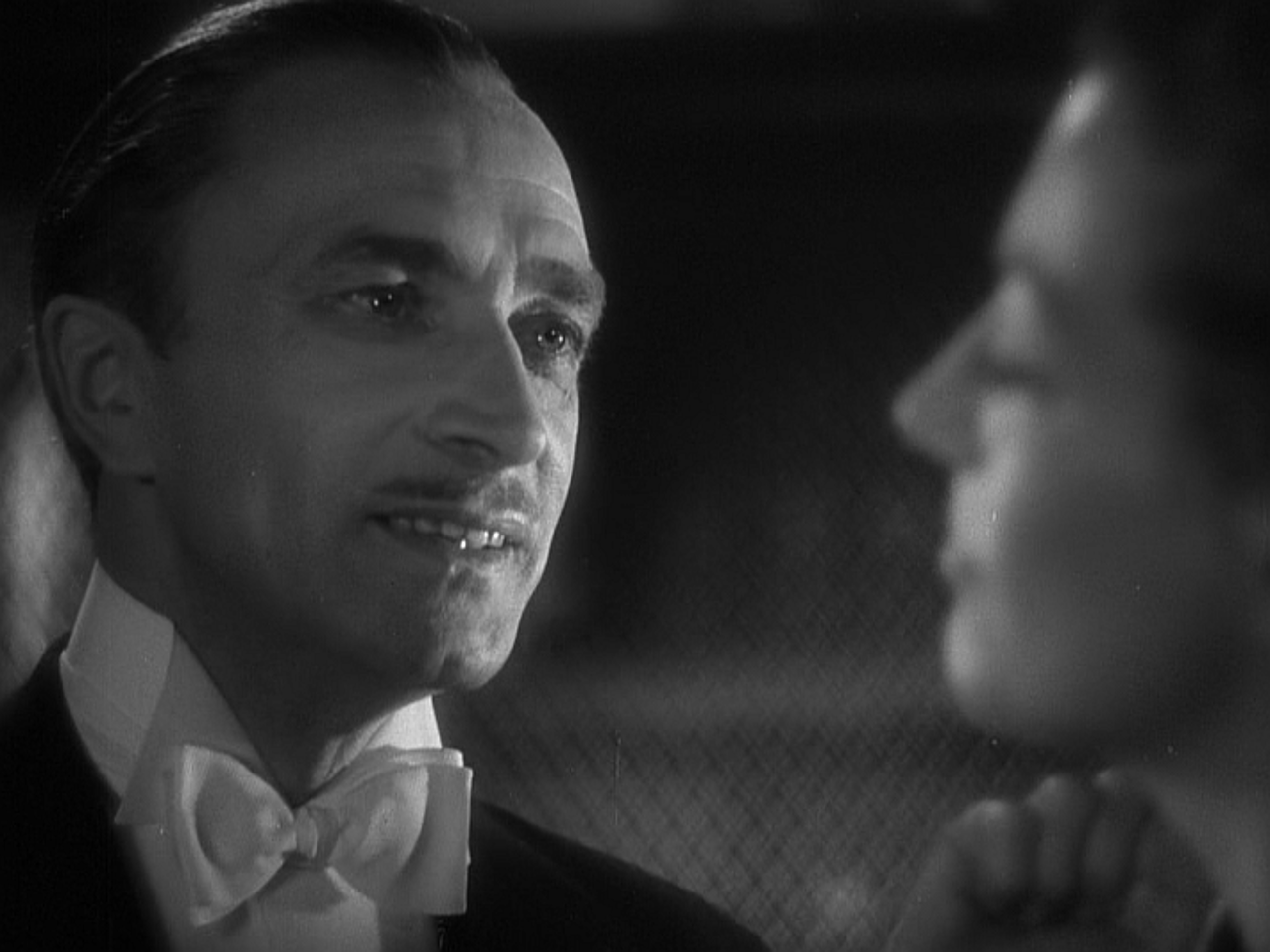
The first time he really looks at her, you can see the wheels turning in his head almost immediately as spots his prey (see clip above). He even bares his teeth to her in a diabolical and disarming smile. He knows early on he can use her but isn't sure how much to reveal, how much of himself to let her see. When she returns after her reconstructive surgery, he greets her with charm tinged with mild annoyance. But when he sees her new face, the mask cracks open and he inspects her like an animal sniffing out a threat. He decides he can take advantage of her new confidence to bind her even closer to him, starting to play the weaving song on the piano, laying the groundwork for the next phase of his plan. When he makes it sound like she's the one suggesting they kill the heir to the Barring family fortune, a previously unseen intensity and fire creep into his eyes. His cruelty and malice are suddenly right under the surface.
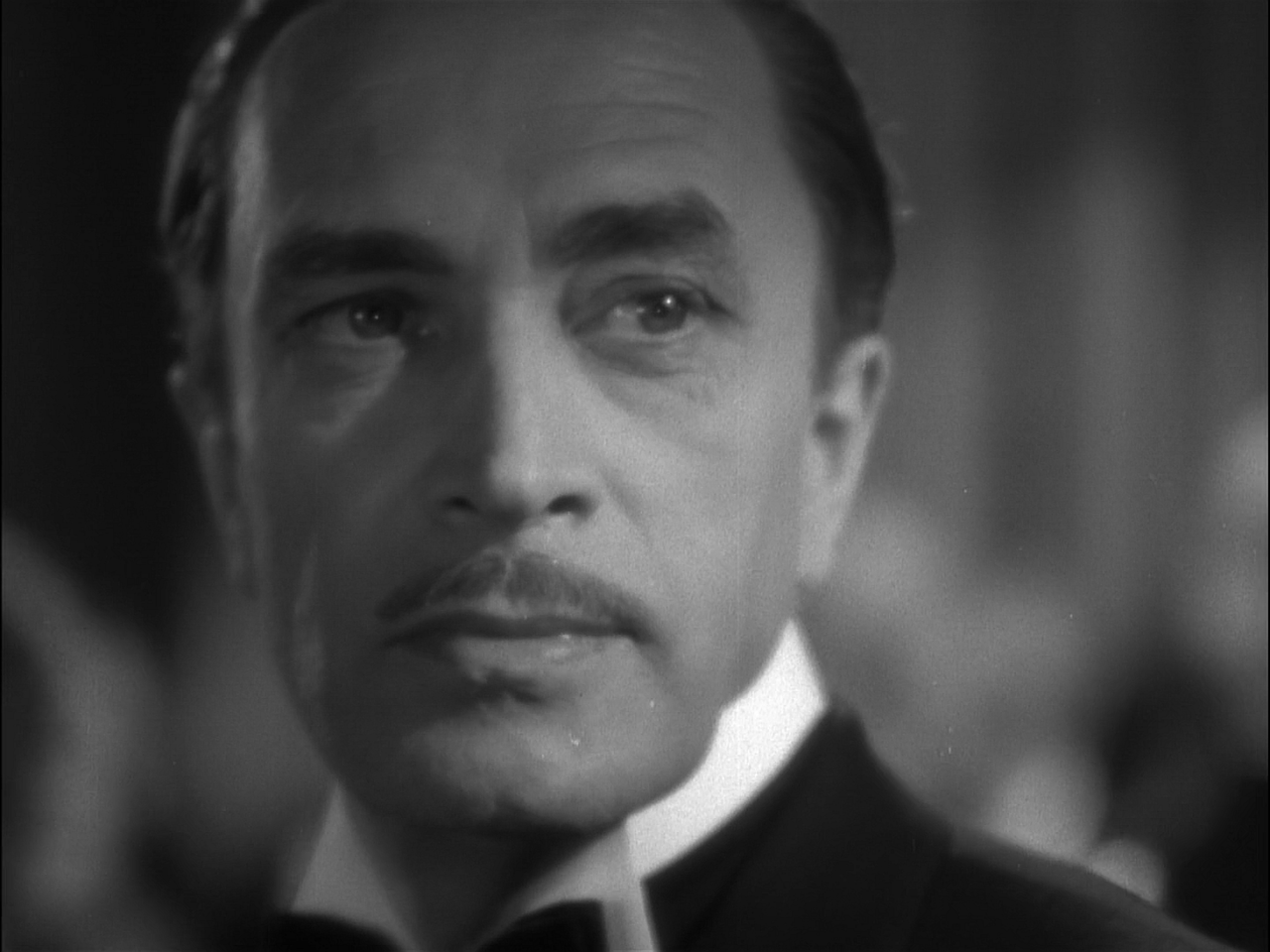
Torsten Barring reacts, or rather doesn't react, to Anna's scars
Vocally, Veidt chose to keep Torsten's voice silky even when he's being nasty. The first time he raises his voice to Anna is during the attic scene when he finally shows her his true face, and only then when his back is turned. There are a lot of interesting things happening whenever Torsten turns his back -- when Anna reveals her "vocation" as a professional criminal, he's facing away from her, but we get to see the fraction of a second where he realizes everything is falling into place, and that look disappears the instant he turns back to her. It's only then that he carefully and calculatedly reveals his own damaged nature to Anna, saying they're just alike, "both poor, both wretched." And Connie wanted us, the audience, to buy that Torsten really believes it too.
Torsten's seemingly sudden 180 degree shift into power hungry psycho killer at the end does at first maybe come across as absurd and unrealistic, but as more and more men today turn out to be absolute monsters, I have to think maybe Torsten's not as much of a caricature as people assume. In this context, the reveal of his ambiguous plans for some kind of authoritarian power grab doesn’t feel all that farfetched. The whole time, he plays Anna like a fiddle to get what he wants: money. And with money comes influence and power, not just to pay off his increasing debts, but money to control and subjugate others. He believes wholeheartedly that he was cheated from the family fortune, and that belief festered in his mind until it made him sick for any kind of alternate future where he's the one doing the taking instead of being taken from. It's an all too common male power fantasy we still see over and over. The fact that we don't see this side of Tosten right away feels unfortunately prescient.
The scene in the Barring family home attic is Connie's moment to shine. His monologue is perfectly executed, it's just unhinged enough for the direction the film winds up going in. Up until and including this point, you don't want to take Torsten seriously, but there are moments here when his eyes glaze over and he's almost literally panting when you realize he's completely serious. His utter contemptuous superiority and disgust at Anna's decision to be a decent person is a masterclass in classic cinema villainy. And when he stalks away from her saying, "The spirit of love has triumphed, yes; God is in his heaven, yes!", he pauses, turns back to her and reveals another layer, the core of his being. He's no longer wickedly charming playboy Torsten Barring, he is Lucifer, cast out of heaven, steeped in his own bitter rage and resentment, contorted into a hungry, dangerous animal. It's interesting there aren't a lot of cuts in this scene, it's mostly a single shot and we don't get any direct closeups of Anna. She's always in the foreground, but the camera doesn't single her out, it keeps both of them in the shot, eventually pushing in to an uncomfortable closeup of him with his hand around her throat. And she barely speaks, and instead of fighting with him, she shuts down.
The intensity of the attic scene makes it seem like Anna and Torsten should have had more of a final, climactic moment together. While the sleigh ride chase in the snow is exciting, it's not the showdown these two powerful characters deserved.
Torsten Barring is a wonderful role because it's such a departure from Veidt's other Hollywood villains in the 1940s. He very nearly steals the film from screen queen Joan Crawford. It's nearly impossible to take your eyes off him. He looks incredible, his suits are impeccable, his voice is sensually sinister. This is precisely what audiences wanted from him, they were basically clamoring for it in the heaps of fan letters written to Connie. And it's true, Conrad Veidt has an unmatched presence and hypnotic quality as Torsten Barring that wouldn't be seen again in another film actor for decades.
Lucifer in a tuxedo
It has to be said that it genuinely looks like Conrad Veidt is having the time of his life in this film. He must have really loved this character because he went on to reprise the role of Torsten Barring in not one but two radio play versions of A Woman's Face. Both broadcasts are available to listen to online, but be warned, they are pure camp in a way that the film is not.
Despite its imperfections, one would think A Woman's Face would be a sign of things to come for Conrad Veidt's career. His performance alone would today be the rocket that sends him into super stardom. But, sadly, it was not to be. He did go on to co-star again with Joan Crawford, but never again did he get to play such an interesting character in an equally interesting Hollywood studio film, perhaps with the exception of his dual roles in 1942's Nazi Agent. He is from here on out sadly relegated to supporting actor status, and that's being generous.
Coming soon, Part 3: Whistling in the Dark, The Men in Her Life, All Through The Night & Hollywood Typecasting
---
RESOURCES
- Conrad Veidt On Screen, John T. Soister
- Joan Crawford: a Biography, Bob Thomas
- Possessed: The Life of Joan Crawford, Donald Spoto
- George Cukor: Master of Elegance, Emanuel Levy
- George Cukor: A Double Life, Patrick McGilligan
- The Celluloid Muse: Hollywood Directors Speak, Charles Higham


.png)
.png)
No comments:
Post a Comment